Paths and Styles of Yoga: What’s the difference?
When you start exploring yoga, you quickly come across terms like “Hatha Yoga,” “Vinyasa,” “Bhakti Yoga,” “Raja Yoga,” “Ashtanga”… And it’s easy to get confused. Are they all the same thing? Are they different styles of physical practice? The answer is no. There is a fundamental difference between the traditional paths of yoga and the modern styles of yoga.
The Paths of Yoga: traditional philosophical routes
The paths of yoga are philosophical and spiritual approaches that appear in ancient texts such as the Bhagavad Gita (5th century BCE). They are routes toward what yoga defines as its ultimate goal: union with the divine, liberation from suffering, or a deep understanding of reality, depending on how you choose to interpret it.
These paths are associated with different human temperaments. It’s not about choosing one and rejecting the others, but about finding the one that resonates most with your personality—although ideally, elements of several paths are integrated.
Bhakti Yoga – The path of devotion
This is the yoga of love and devotion. Practitioners of Bhakti Yoga express their spirituality through chanting mantras (kirtan), prayer, repetition of divine names (japa), and devotional rituals. It does not require physical strength or great intellect—only an open heart. It is the most common path in India and, according to tradition, one of the most direct.
Who is it for? Emotional, expressive people who connect through love, devotion, and ritual.
Karma Yoga – The path of selfless action
Karma Yoga is the yoga of action without attachment to results. It is about fulfilling your duties and responsibilities (as a parent, worker, neighbor) without ego, without expecting rewards or recognition. Every action becomes an offering, an act of service. The Bhagavad Gita dedicates much of its teaching to this path.
Who is it for? Active, extroverted people who find meaning in service and action.
Jñana Yoga – The path of knowledge
Also written as Gnana Yoga, this is the path of wisdom and discernment. Practitioners of Jñana Yoga study sacred texts (Vedas, Upanishads), reflect deeply on the nature of reality, and seek to discern between the permanent and the transient, the real and the illusory. It is an intellectual and philosophical path.
Who is it for? Analytical, intellectual, philosophical people who need to understand before they believe.
Raja Yoga – The path of mental control
Raja means “royal” or “king,” which is why it is known as the Royal Yoga. This path focuses on meditation and mastery of the mind. The Yoga Sutras of Patanjali are the key text of Raja Yoga, describing the eight limbs (Ashtanga) that lead to enlightenment: yamas, niyamas, asana, pranayama, pratyahara, dharana, dhyana, and samadhi.
Who is it for? Disciplined, introspective people drawn to meditation and contemplation.
Hatha Yoga – The path of energy
This is where confusion often begins, because Hatha Yoga appears both as a traditional path and as a modern style. Originally, Hatha Yoga was (and still is) a path that emphasizes mastery of the physical body and vital energy (prana) as preparation for meditation. The Hatha Yoga Pradipika, written in the 15th century, is its foundational text.
Who is it for? People who connect through the body and physical practice.
Yoga Styles: modern practical variations
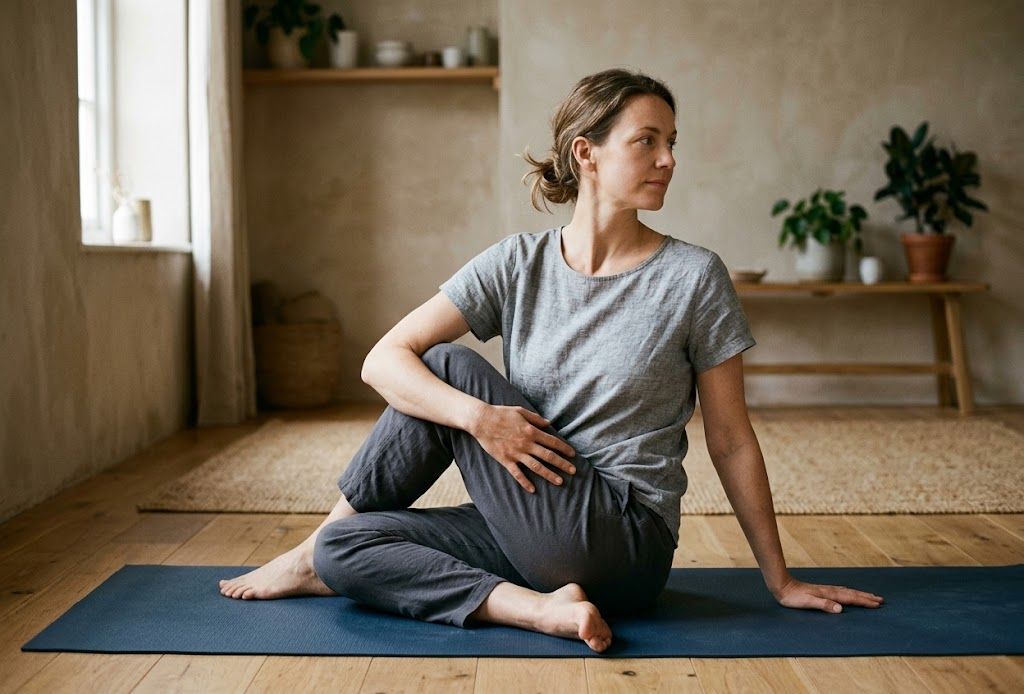
Now, when we talk about “yoga styles,” we are referring to practical variations that emerged mainly in the 20th century, adapted for the West. These styles focus primarily on asanas (postures) and pranayama (breathing), and are what you find in most studios and gyms.
Hatha Yoga (modern style)
As a style, modern Hatha Yoga is slow, focused on holding postures for longer periods, with an emphasis on alignment and breath. It is the foundational style from which many others derive.
Vinyasa Yoga
Dynamic and fluid, where postures are linked in sequences synchronized with the breath. Each movement corresponds to an inhalation or exhalation. It is more cardiovascular than Hatha.
Ashtanga Yoga
A demanding style developed by Pattabhi Jois, consisting of fixed sequences of postures that are always practiced in the same order. It requires strength and flexibility.
Iyengar Yoga
Created by B.K.S. Iyengar, it is characterized by its strong emphasis on precise body alignment and the use of props (blocks, straps, blankets) to help achieve postures correctly.
Kundalini Yoga
Combines dynamic postures with intense breathing, mantra chanting, and meditation, with the aim of awakening the kundalini energy said to reside at the base of the spine.
So, what’s the difference?
The paths are comprehensive approaches that include ethics, philosophy, devotion, service, study, and meditation.
The styles are modern physical tools, mostly focused on asanas and pranayama, that answer the question: “How do I want to practice yoga postures?” They are practical adaptations that make yoga accessible to a contemporary Western audience.
You can practice Vinyasa Yoga (style) while following the principles of Karma Yoga (path), serving selflessly in your daily life. Or you can practice Iyengar Yoga (style) as part of your Raja Yoga (path), focusing on meditation and mental discipline.
Hatha Yoga is the bridge between the two: it is both a traditional path of bodily mastery and the physical foundation of most modern styles.
You don’t need to label yourself as a practitioner of a specific path or style. Most people who practice yoga integrate elements from several paths in their lives and explore different styles depending on their current needs.
What matters is understanding that when you go to a “yoga” class, you are most likely experiencing a style (Vinyasa, Hatha, Ashtanga). But yoga also includes the paths of yoga.