OM or AUM: The primordial sound of yoga
If you’ve ever stepped into a yoga class, you’ve probably heard that characteristic sound at the beginning or the end of the practice. That “Ommmm” that resonates throughout the space. But did you know that it’s actually not “Om” but “AUM”? And that each part of this sound has a specific meaning?
From OM to AUM
Although we commonly write it as “Om,” the correct pronunciation is AUM (or A-U-M). This Sanskrit syllable is considered the primordial sound, the original vibration of the universe according to yoga philosophy. Patañjali, in his Yoga Sutras, describes it as the sonic representation of the divine, a bridge between our individuality and something greater.
The three syllables (plus one)
AUM is composed of three main sounds, plus a fourth element, which is silence:
- A (Aaaaa): It originates in the throat and resonates in the chest. It represents creation, the beginning, the waking state. When you pronounce it, you’ll feel the vibration below the navel and in the chest.
- U (Uuuuu): It sounds more like a prolonged “O.” The vibration is felt in the throat and chest cavity. It symbolizes preservation, maintenance, the dream state.
- M (Mmmm): It is pronounced with the lips closed, and the vibration resonates in the head. It represents transformation, the closing of a cycle, the state of deep sleep.
Silence: After pronouncing “AUM,” there is a pause of silence. This is the fourth element, just as important as the other three. It represents the state of pure consciousness, that which transcends words.
How is it practiced?
You don’t need to be an expert to start experimenting with AUM. Here’s a simple exercise:
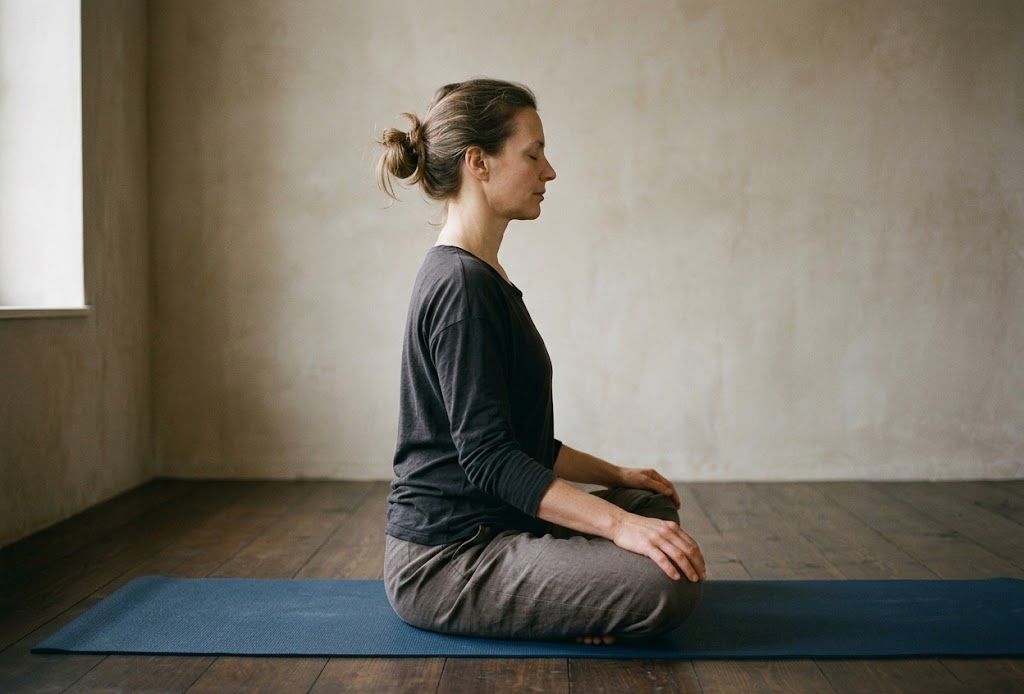
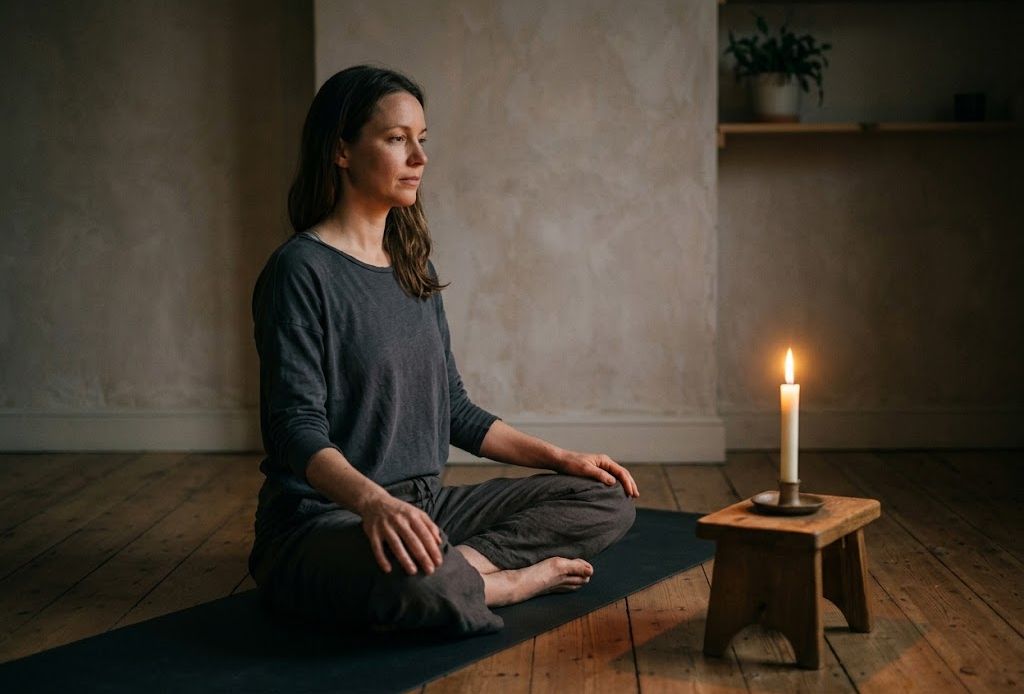
1. Find a quiet place and sit comfortably. You can sit on the floor with your legs crossed, or on a chair with your feet flat on the ground. Your spine should be upright but relaxed.
2. Take a deep breath in through your nose. Feel how the air fills your lungs.
3. As you exhale, slowly pronounce AUM:
- Begin with “Aaaaa” (2–3 seconds)
- Transition into “Uuuuu” (2–3 seconds)
- Finish with “Mmmm” (2–3 seconds)
4. Observe the silence that follows for a few seconds before inhaling again.
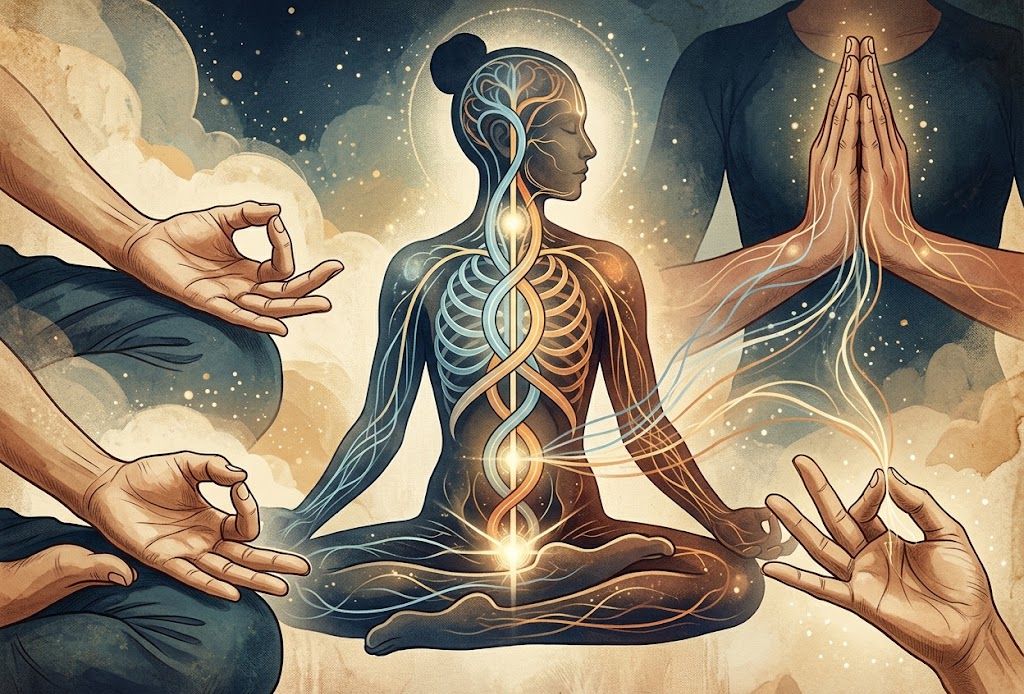
An alternative exercise (inspired by pranayama techniques): Sitting with your spine upright, imagine that your breath originates at the base of your spine. As you inhale, visualize that energy rising up your spine until it reaches the space between your eyebrows. While inhaling, mentally repeat “AAAAAAUUUUU.” As you exhale, feel that energy descend from the space between the eyebrows back to the base of the spine, and mentally repeat “UUUUMMMMM.”
What is it for?
Beyond any mystical interpretation, the practice of AUM has tangible effects:
- Centers the mind: It’s hard to think about other things when you’re focused on producing and feeling these vibrations.
- Regulates the breath: It naturally leads to a slow, controlled exhalation, which activates the parasympathetic nervous system (the relaxation response).
- Creates a ritual: Chanting AUM at the beginning or end of a practice signals to the mind, “this is a special moment, different from the rest of the day.”
- Creates group connection: When several people chant AUM together, a synchronization occurs. Individual vibrations merge into a single one.
To conclude
You don’t need to believe in any particular philosophy to experiment with AUM. Treat it as a conscious breathing exercise, a way to quiet the mind, or simply as a ritual that marks the beginning and end of your practice. Try it for yourself and observe how you feel afterward.
And remember: if at first you feel a bit silly chanting, that’s completely normal. With practice, that feeling fades away, leaving only the vibration.