In a previous article we mentioned that vinyasa krama is the principle that organizes practice over time. It is worth pausing on that concept, because its origin and its internal logic explain much of why yoga, when practiced this way, produces an effect so different from simply linking postures together.
The system as we know it today comes from Tirumalai Krishnamacharya, the central figure of modern yoga. From his teachings arose, directly or indirectly, almost all the styles practiced in the West: Pattabhi Jois took his version to Ashtanga, B.K.S. Iyengar developed the use of props, and his own son, T.K.V. Desikachar, continued transmitting the original method under the name Viniyoga. Vinyasa krama is, in that sense, the source from which the others branched out.
The word vinyasa does not simply mean "sequence of postures," as it is often understood today. It is composed of the prefix vi, which indicates variation, and nyasa, which means placing within a determined order. It is not moving in any way between one posture and another: it is moving following a precise logic, where each transition has a function as important as the posture itself. Krama, for its part, means step or rung. Together, the two words describe a method of ordered progression — not a fluid improvisation, but a path with structure.
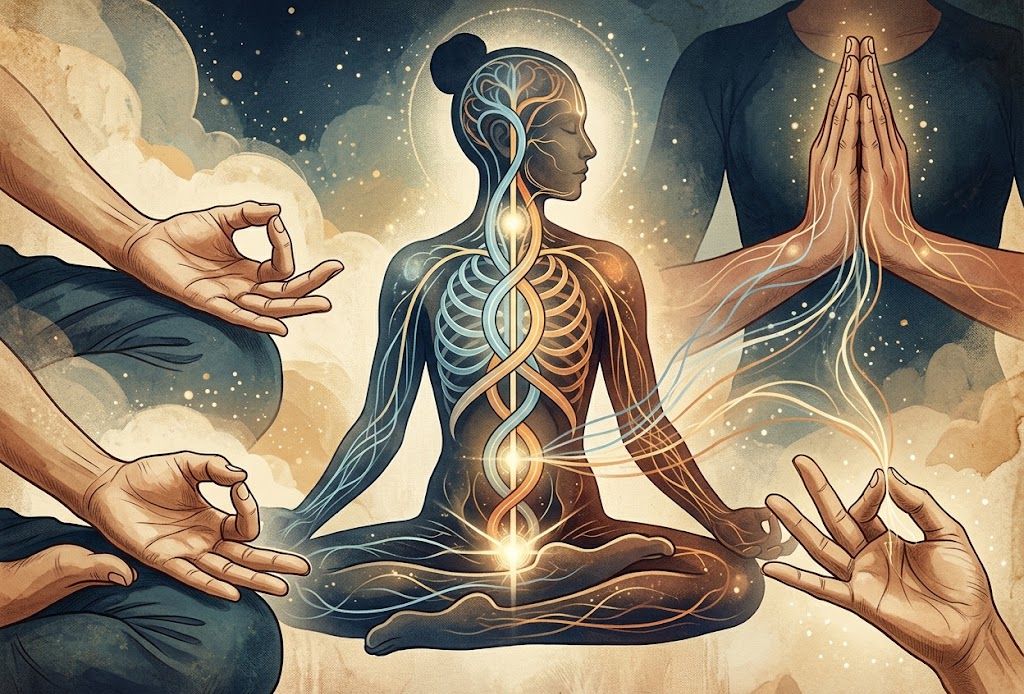
That structure rests on a single axis: the breath. The requirement is not only to coordinate movement with the air that enters and leaves, but to sustain a soft, prolonged, and audible breath — ujjayi breathing — that acts as the harness between body and mind. When that breath remains stable throughout the entire sequence, the mind follows it naturally and stops dispersing toward other stimuli. The technique, in this system, is always at the service of sustaining that respiratory thread, never the other way around.
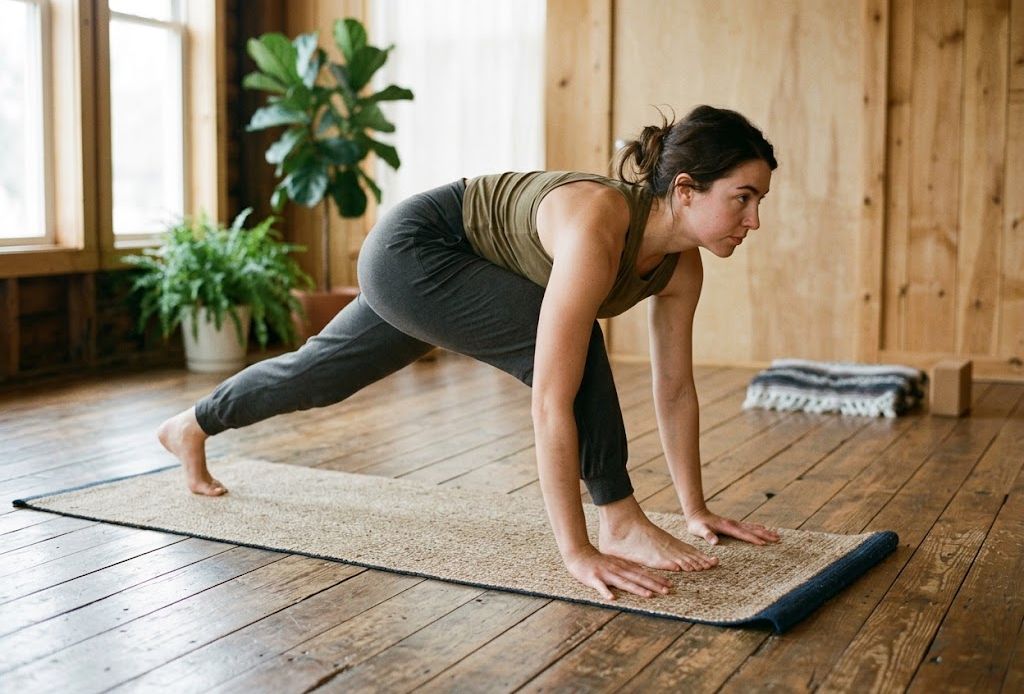
Each main posture is not practiced only once, but through multiple variations that prepare the body progressively. One enters and exits it several times, each entry a little deeper than the previous one, before holding it for the necessary time. This is exactly what we mentioned in the previous article about dynamic practice preceding static practice: the body needs to recognize the movement before it can inhabit it safely.
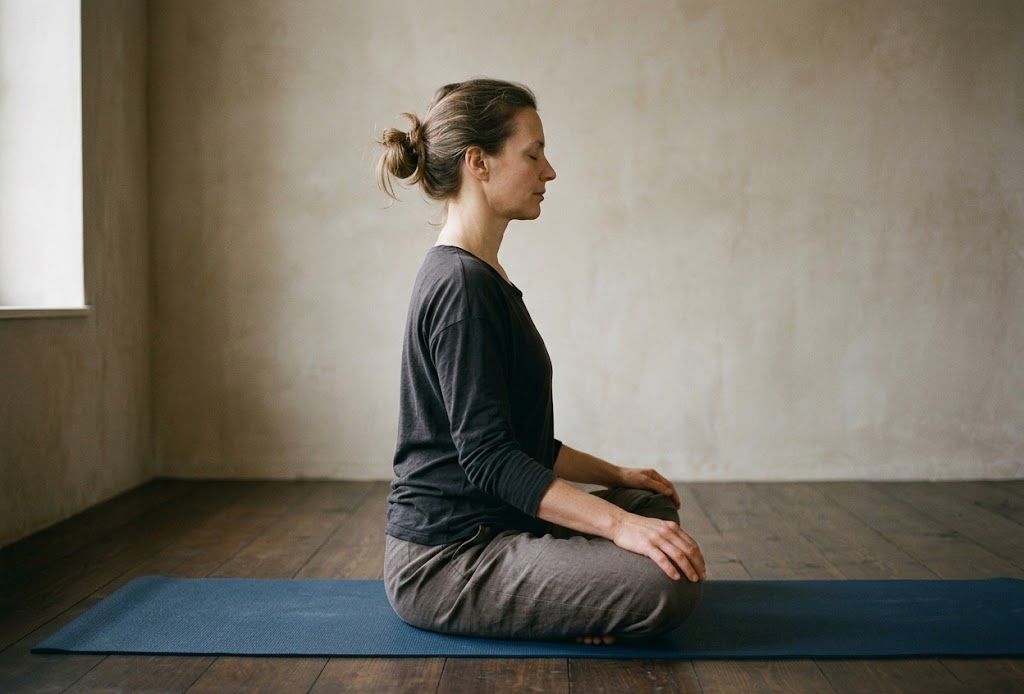
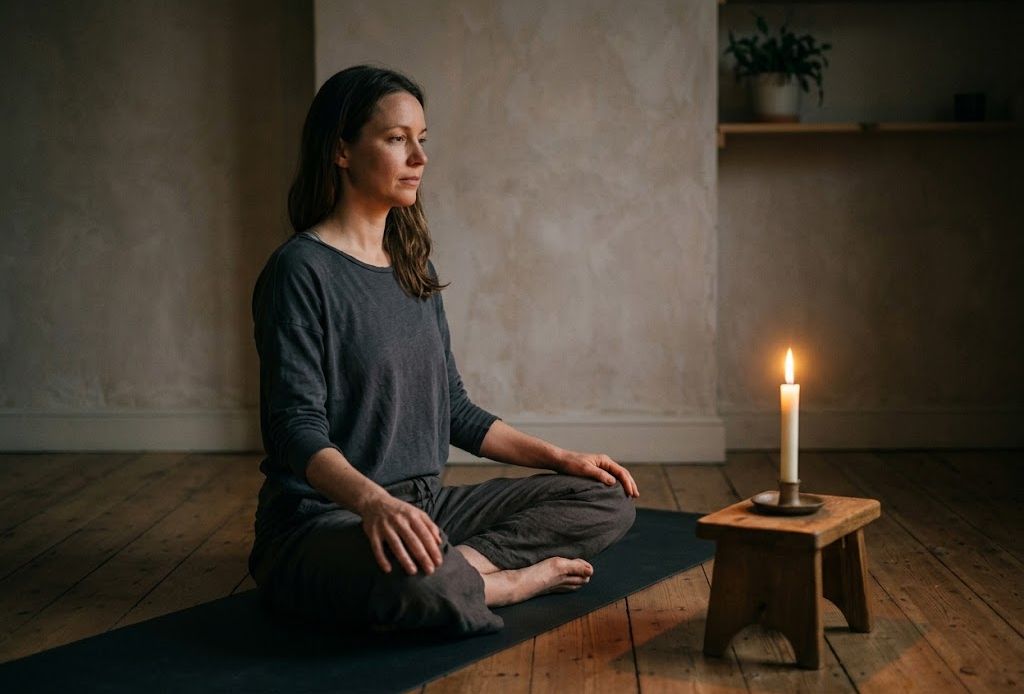
Unlike what is today associated with the word "vinyasa" on social media, the original method does not depend on external elements. It does not use props — its creator considered they should be reserved for people with some physical limitation —, it is not practiced with music, and as the practitioner advances, closing the eyes is recommended. That decision is not aesthetic: it is part of pratyahara, the withdrawal of the senses inward, which we already described as a precondition for sustained concentration. In vinyasa krama it does not matter what the person practicing next to you is doing; the only reference is one's own breath.
The complete system is organized into ten main sequences, ordered according to the position of the body. It begins standing, continues with seated postures and variations on one leg, goes on with supine postures, back extensions, twists, inversions, and meditation postures, and closes with a relaxation series. Each sequence advances from the accessible to the advanced, so that the most demanding postures appear only at the end, when the body has already been prepared by everything before. No one reaches a difficult posture by their own decision: they reach it when the sequence has left them prepared for that.
What distinguishes vinyasa krama is not the difficulty of its postures, but the intelligence of its progression. Most of the benefit of a practice does not depend on reaching the most advanced variations, but on sustaining the simplest ones with attention. That is, ultimately, the same principle that runs through this entire series of articles: it is not about how far one gets in a posture, but about the quality of presence with which one travels the path toward it.