Yoga

Viniyoga 2


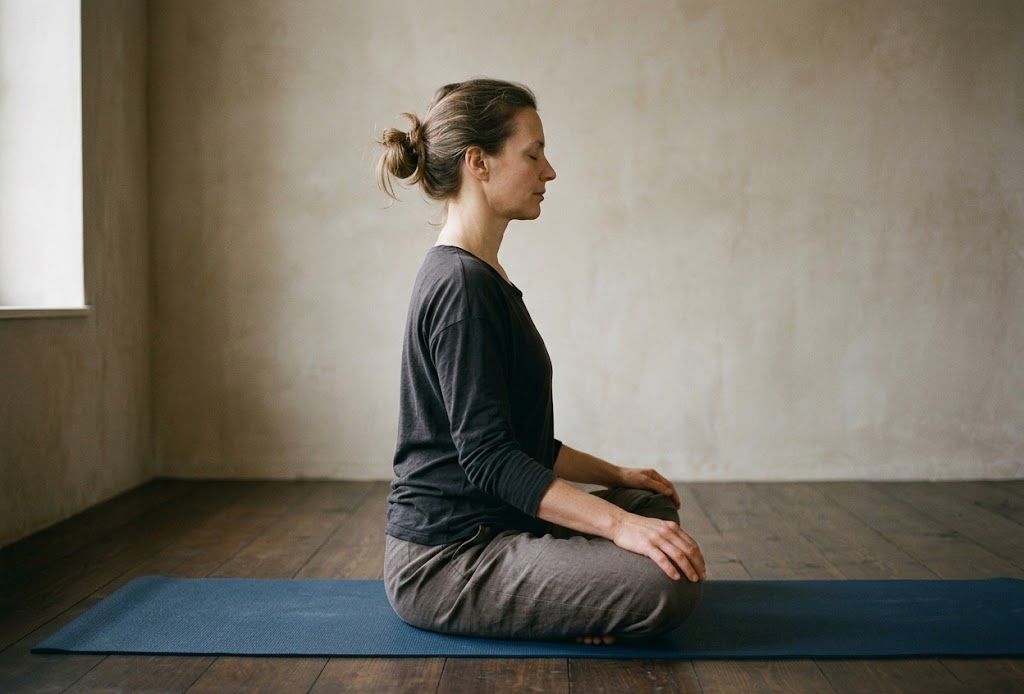
Viniyoga is not a style of yoga. It is an orientation that runs through any style: the practice must adapt to the person, not the person to the practice. That premise, which we developed in a previous article, has concrete consequences in how a session is built, how a sequence is chosen, and how it is assessed whether what is being done is appropriate for the present moment.

The starting point is always the current state of the organism. Not yesterday's state, not the ideal state, not the state one had six months ago when practice was at its best. Today's state, right now, before starting. That initial observation is not a formality but the most important information of the session. If the body arrives tense and agitated, the practice begins differently than if it arrives calm and available. If there is an area that hurts or is restricted, that area defines what can be done, not what one should be able to do.

Vinyasa krama is the principle that organises that adaptation over time. Krama means step, nyasa means to place, and the prefix vi indicates that this placing occurs in a particular and deliberate way. It is not enough to take a step — that step must lead in the right direction and be taken in the right way. A well-constructed sequence has an internal logic: each posture prepares the next, each movement has a counterposture that neutralises its effects, and the end of the session returns the organism to a state of balance from which it can resume the day's activities.

The breath is the thread that organises the entire sequence. It does not accompany the movement — it initiates it. Inhalation expands, lifts and opens; that is why backbends and extension movements are done on the inhale. Exhalation contracts and deepens; that is why forward bends and twists are done on the exhale. When movement follows that natural pattern, the body does not need to force anything: the respiratory mechanics are already doing part of the work. And when the breath becomes interrupted or forced, that is the signal that the practice has exceeded the system's real limit that day.

Dynamic practice always precedes static practice. Entering and exiting a posture with the rhythm of the breath several times before holding it is not a reduced version of the real practice — it is its prerequisite. The body needs to recognise the movement before it can inhabit it. A posture held before the body is prepared for it produces compensations that accumulate. A posture held after having moved through it dynamically settles naturally.

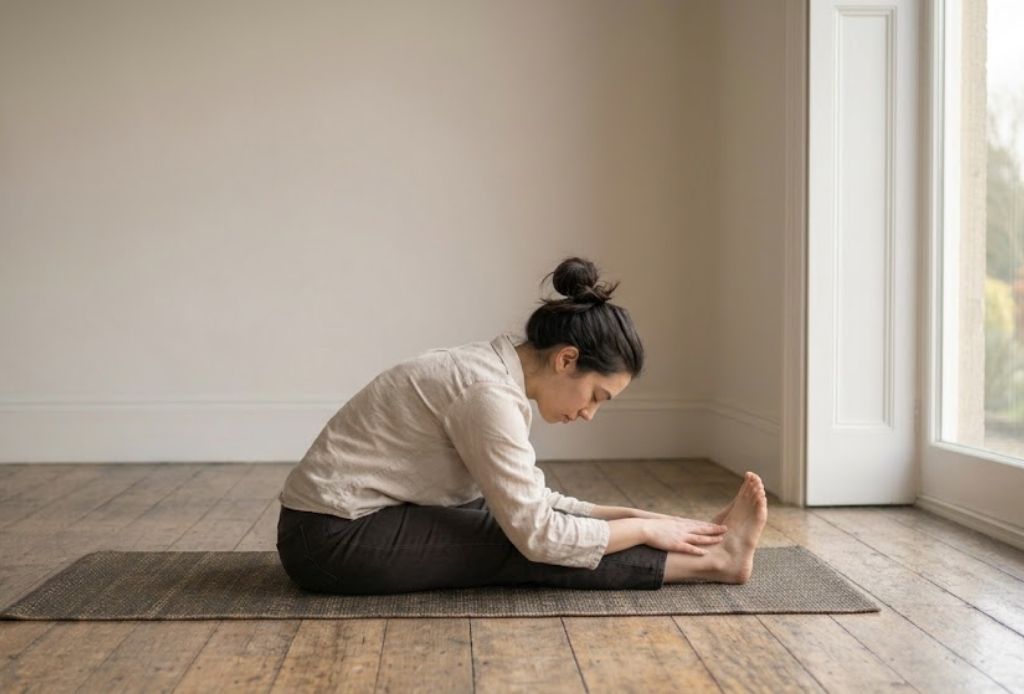
Every action has two effects: one that builds and one that wears down. Intelligent practice does not ignore the second. Counterpostures exist precisely to neutralise the negative effects of the main postures. A deep backbend needs a gentle forward bend. An intense twist needs a moment of neutral extension. Without that balance, accumulated tension passes from one posture to the next and from the session to the rest of the day.

Viniyoga applied to the doshas we described in the previous article is a concrete example of this principle. Recognising that Kapha needs activation and Vata needs grounding is not labelling the practitioner but reading their state and building a sequence from there. That reading changes according to the day, the season, the accumulated stress level and dozens of other variables. That is why there is no universally correct sequence. There is a correct sequence for this person, today, in this moment.

Consistency in practice does not mean always doing the same thing. It means returning to observe the starting point each time and building from there with the same intention. That is what Desikachar called the Viniyoga spirit: not a technique but a way of reading the situation before responding to it.

November 2026

AUM

Cultura Yoga

AUM
November 19, 2026

Enter
Turiya

Cultura Yoga

Turiya
November 17, 2026

Enter
Tantra

Cultura Yoga

Tantra
November 12, 2026

Enter
Bandhas Nadis Mudras

Cultura Yoga

Bandhas Nadis Mudras
November 10, 2026

Enter
Kundalini

Cultura Yoga

Kundalini
November 5, 2026

Enter
Kriya

Cultura Yoga

Kriya
November 3, 2026

Enter
Gita

Cultura Yoga

Gita
November 1, 2026

Enter
Ayurveda

Cultura Yoga

Ayurveda
November 1, 2026

Enter

Yoga Classes

Yoga classes offer a space where mind and body integrate, cultivating balance and well-being. It is not just about physical postures, but also about breathing with awareness and finding serenity through practice.

Each session invites you to dedicate a moment to yourself, combining movement, breathing, and calm. Over time, yoga strengthens the body, quiets the mind, and helps generate holistic well-being.

Meditation tip

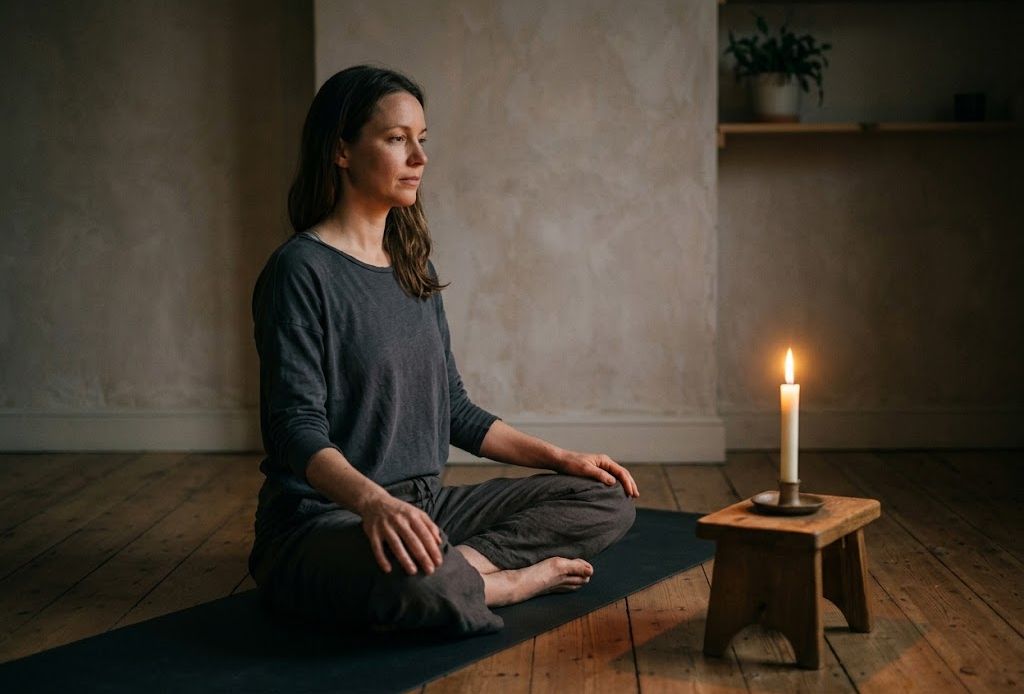
Find a quiet place and get comfortable, seated or lying down, whichever works best for you. Try starting with just three minutes: close your eyes and follow the rhythm of your breath. When your mind wanders, which it will, gently return to your breath without judging yourself. That returning, again and again, is the practice.

Contact

Activities 2027

Astrology: Workshops 2027

- 100% Online Workshops.
- Each workshop is independent.
- Virtual Classroom with all the content.

Join one or all of them. Throughout the year we move from the fundamentals to practical application, to better understand your own inner processes.

Yoga and Meditation: Workshops 2027

- 100% Online Workshops.
- Each workshop is independent.
- Virtual Classroom with all the content.

Join one or all of them. Spaces to practice, learn and find balance, with topics to be confirmed.