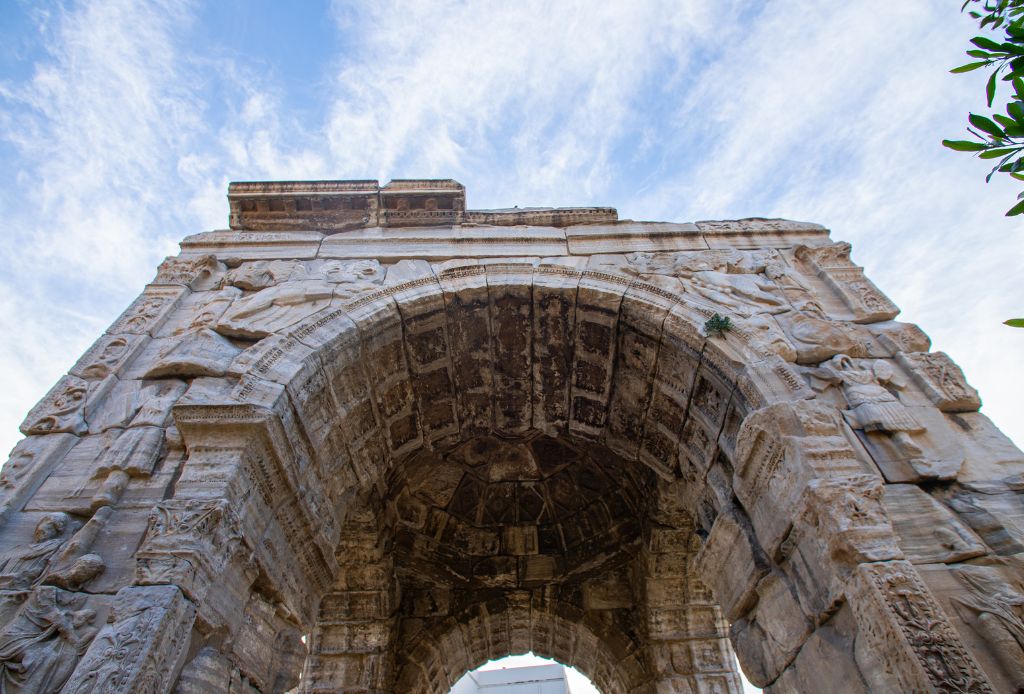
Marcus Aurelius was emperor of Rome. He carried the world on his shoulders. Wars, plagues, betrayals, the death of his children. Yet when night fell and the noise of the world faded, he sat alone and wrote. He did not write for others. He wrote not to fall. To remind himself who he wanted to be when everything around him pulled him elsewhere. In those pages, which we now call Meditations, he does not feel strong. He feels human. And that is why he trains his mind.
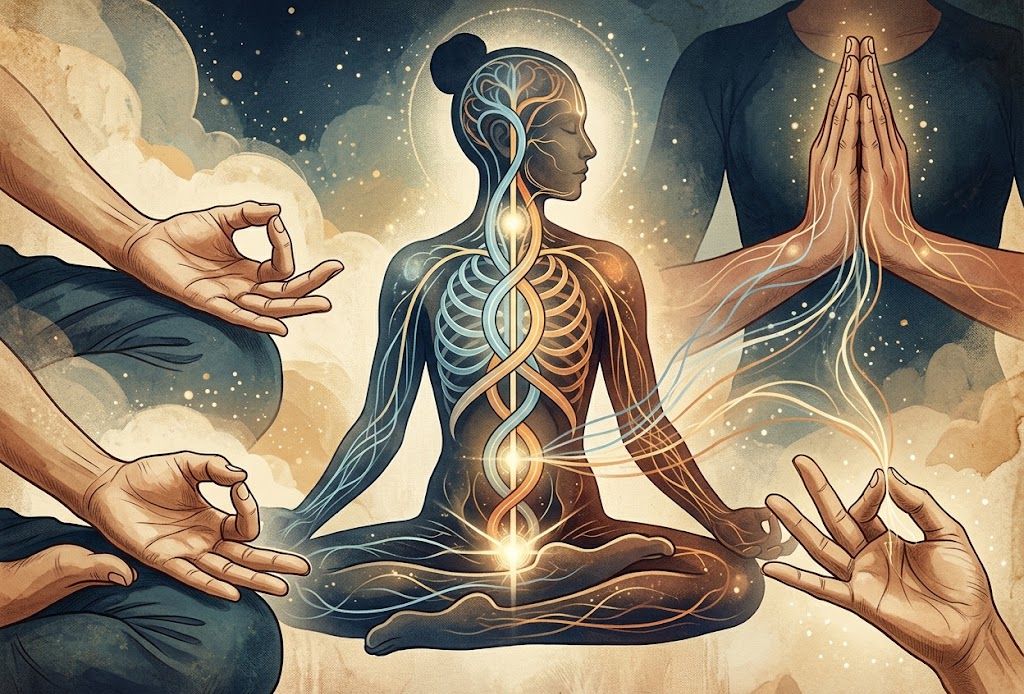
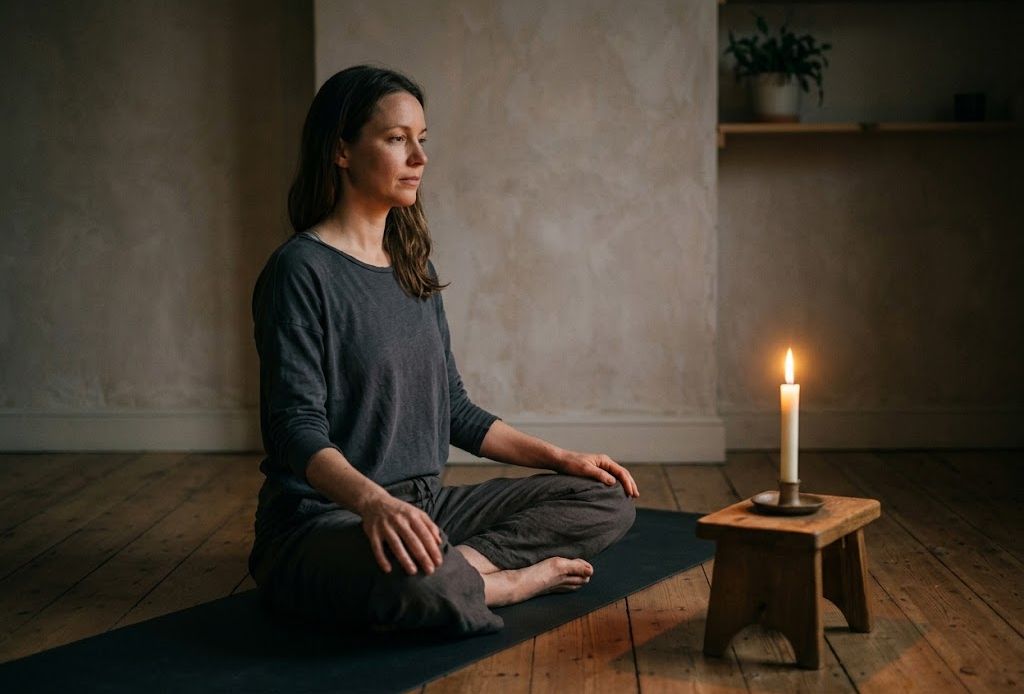
Yoga also trains the mind. Not from power or authority. From daily practice. From repetition. From the breath that returns again and again. Patanjali, in the Yoga Sutras, does not say "believe in this." He says "practice this." Marcus Aurelius does not say "trust in fate." He says "train your judgment." Both point in the same direction: the mind is not born strong. It becomes strong.
First parallel: emotional strength is not about not feeling. It is about not being enslaved by what you feel. Marcus Aurelius writes clearly: do not be carried away by the first impression. You feel it, you observe it, but you do not follow it. In yoga, this is called being the witness (sakshi). Irritation arises. You do not deny it. You observe it. You do not act from it. Strength is not in eliminating emotion. It is in not being governed by it.
Second parallel: it is not what happens, but what you think about what happens. Marcus Aurelius says: if you remove the judgment, you remove the wound. It is not naive. He knows it hurts. But he also knows that the mind adds a story to the pain, and that story is often heavier than the event itself. In yoga, samskaras are exactly that: imprints that interpret, add meaning, automatically construct reality. The training consists of seeing the imprint without fully believing it.
Third parallel: the space between stimulus and response. Someone says something. The first reaction is automatic. But if there is a small space, a breath, a pause, the possibility of choosing appears. Marcus Aurelius trained that pause. Do not react immediately. Wait. Look. Then decide. In yoga, Pratyahara (withdrawal of the senses) and Dharana (concentration) train exactly that: not chasing every stimulus. Being able to stay still while the world pulls.
Fourth parallel: staying in the present. Marcus Aurelius writes: the present is enough. Most suffering is not in what is happening now, but in what the mind fears will happen tomorrow. The future does not exist. It exists only in imagination. Yoga knows this well. The practice of Dhyana (meditation) is not about escaping the world. It is about returning again and again to the now, to the breath, to the present sensation, without letting the mind run toward scenarios that have not yet occurred.
Fifth parallel: accepting what cannot be changed. Marcus Aurelius lived immersed in chaos. He could not stop the wars, the plagues, the betrayals. But he could choose how to face them. It is not resignation. It is lucidity. Fighting the inevitable is a slow way to consume oneself. In yoga, this is called vairagya: detachment from the outcome. It does not mean doing nothing. It means doing what can be done and letting go of what is not up to one.
Sixth parallel: integrity above perfection. Marcus Aurelius did not seek to be perfect. He sought to be integral. Coherent with his values, even when no one was watching, even when it would be easier to give in to impulse. In yoga, the yamas and niyamas are not moral commandments. They are directions. They are not perfectly fulfilled. They are practiced. Day after day, with falls and returns. The goal is not purity. The goal is not to betray oneself.
One does not have to choose between Marcus Aurelius and the yogi. They are not the same. One was a Roman emperor. The other is a tradition thousands of years old from India. But both pointed in the same direction: the mind is trained. It is not born strong. It becomes strong. It is not a gift. It is a daily practice. It is an ongoing dialogue with oneself. It is returning again and again, as to the breath, as to the posture, as to the intention of not being carried away.
The path is not singular. Some train the mind with asanas and pranayama. Some train judgment with writing and pause. Some do it with silence or with action. The name does not matter. The tradition does not matter. What matters is the direction: learning not to react automatically, learning to observe without identifying, learning to sustain attention in the midst of noise. That is what Marcus Aurelius did each night. That is what the yogi does each morning.
Practice is the path. There is no final destination where everything resolves. There are good days, bad days, days when the mind seems like a battlefield and days when there is unexpected calm. Marcus Aurelius knew this. That is why he wrote. That is why he reminded himself. The yogi knows this. That is why he returns to the breath, returns to the posture, returns to the intention. It is not about arriving. It is about not stopping the training.