Samskara means activator. It is an automatic and conditioned way of thinking and responding to the events of life. When a samskara is very strong, it is thought of as an unchangeable part of personality: Othello's jealousy, Hamlet's indecision, Macbeth's ambition. This is "their nature". These imprints come from the repetition of the same patterns from a young age, and also from previous lives.
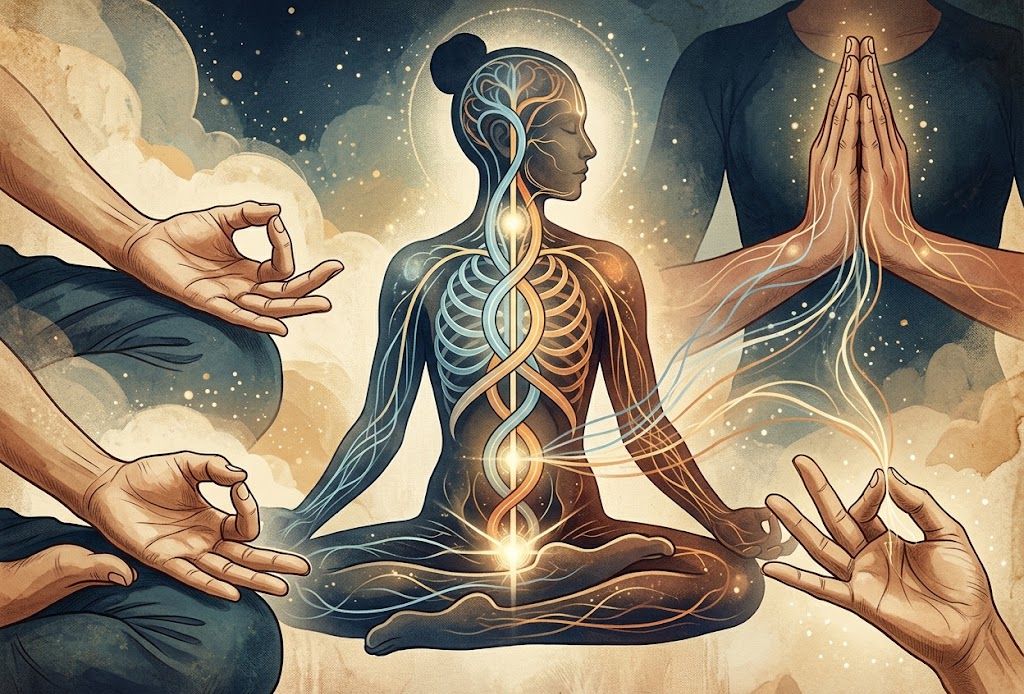
Samskaras are the subtle impressions that all thoughts, intentions and actions leave on the mind. They are below the level of normal consciousness. They are the root of all impulses, character traits and innate dispositions. They are often compared to grooves in the mind, where the seeds of actions that generate the fruits of karma find shelter.
Every physical, verbal and mental activity creates samskaras. These samskaras manifest as inner personality and outer circumstances. Depending on the individual's response, they produce phala (fruits). Samskaras are the quality of consciousness that guides thoughts and emotions toward one's own karma, while being guided by intelligence and discriminating wisdom (viveka).
They can be positive or negative. Positive samskara helps the ascent of consciousness. An ascended consciousness can lead to the creation of positive karma through virtuous actions. Negative samskaras degrade the quality of consciousness. Actions performed from a degraded consciousness generate seeds of negative karma in the mental substance of the actor, developing the potential for bad actions in the near future.
A concrete example. Someone may suffer from claustrophobia if in a previous life they drowned. Someone may feel joy close to ecstasy when smelling incense if in a previous life they were a monk. Actions accumulated in one life are transmitted to future reincarnations through samskaras. Each person is born with samskaras imprinted and incorporated into their mind from past lives.
Samskaras originate in a vritti, a wave of thought that arises in the mind. Once that wave leaves the conscious mind, it sinks into the subconscious or unconscious mind, where it remains as a samskara. Thus, samskaras serve as memory deposits that preserve all past experiences in perfect detail. When memories are evoked, samskaras return to the level of the conscious mind.
Each time a samskara is evoked and repeated, the groove becomes deeper and the impression becomes stronger. This ultimately leads to the formation of habits. Samskaras contain hidden expectations and unconscious ideas waiting to be realized. In some cases, they can be strong enough to alter thought processes. They are the individual residues of past karma and future karma.
Yoga practices allow one to encounter samskaras below the threshold of consciousness. Asana, pranayama, dharana, dhyana: all allow one to understand and replace negative imprints with positive ones. The observance of yama and niyama is also part of this purification, as the basis of good actions toward society and toward oneself.
The purpose of spiritual practice is to seek and strengthen certain samskaras while eliminating those that do not align with moral and ethical values. Some schools affirm that all samskaras must be eliminated. Others only the negative ones. A middle path: eliminating the negative ones is necessary for growth and improvement. Eliminating the positive ones as well is necessary for final liberation and samadhi.
Vasana is a past impression in the mind that influences behavior, connected to a samskara. It is the habitual or automatic response to situations. Rooted behavior patterns. Vasanas are obstacles to spiritual growth and happiness, because they are distorted by past experiences, opinions and desires. They create restlessness in the mind and attachment to objects of desire. To attain liberation, the yogi must free themselves from vasanas.
According to some schools, samskaras nestle in the body and mind. They are the reason for certain limitations in yoga practice: the mind that wanders in meditation, the inability to concentrate, difficulty with certain asanas. By working on those postures, the samskara slowly dissolves and is finally eliminated. Intense practice (tapas) removes these personal obstacles from the energy system.
Instead of fighting negative samskaras, practice seeks to replace them. As Yoga Sutra 1.50 says, samskaras born of wisdom can cancel out the others. It is not necessary to fight each imprint one by one. A higher-order imprint is cultivated, linked to clarity and stillness, and this new imprint blocks the appearance of previous ones. Practice does not eliminate imprints by decree. It seeks to change direction: cultivating some, allowing others to weaken.
One who has ease from the beginning in practice is considered favored by karma and a bearer of multiple positive samskaras. One who is called to yoga has practiced in previous lives and is attracted by the samskaras and vasanas that this left behind. Yoga is a process of individual improvement that lasts a lifetime, that lasts all lives, and that can potentially make the world a better place.