Samasthiti is the standing posture from which many yoga practices begin. Its Sanskrit name means "to stand firmly planted in balance," and although it may seem like simply standing up straight, it contains within itself the entire essence of a conscious practice. It is not about achieving a perfect shape, but about inhabiting one's own body from the very first breath.
The feet are the point of contact with the ground. They can be together or hip-width apart, depending on what each body needs to feel stable. What matters is not the distance between them, but the sensation that the entire foot supports evenly: heel, outer edge, ball, and toes. The body's weight does not shift forward or backward, nor does it tip onto one foot alone. It distributes evenly, as if both feet were a single base.
The knees are neither locked nor hyperextended. There is an almost imperceptible micro-bend that keeps the joint alive and receptive. From there, the legs support without stiffness. The pelvis settles into its neutral position: neither tilted too far forward (arching the lower back) nor tucked too far back (flattening the natural curve of the lower spine). Finding this neutral position does not require much analysis; it is enough to feel that the lower abdomen softens and that the tailbone points toward the ground without forcing.
The shoulders unfurl effortlessly. They do not creep up toward the ears nor get pulled excessively back. They simply fall into their natural place, releasing the tension that often accumulates in the neck. The arms hang alongside the torso, with palms facing the thighs or slightly forward. The hands are relaxed, with no tense fingers nor forcefully spread apart. The arms do not drift away from the body nor press against it; they simply accompany.
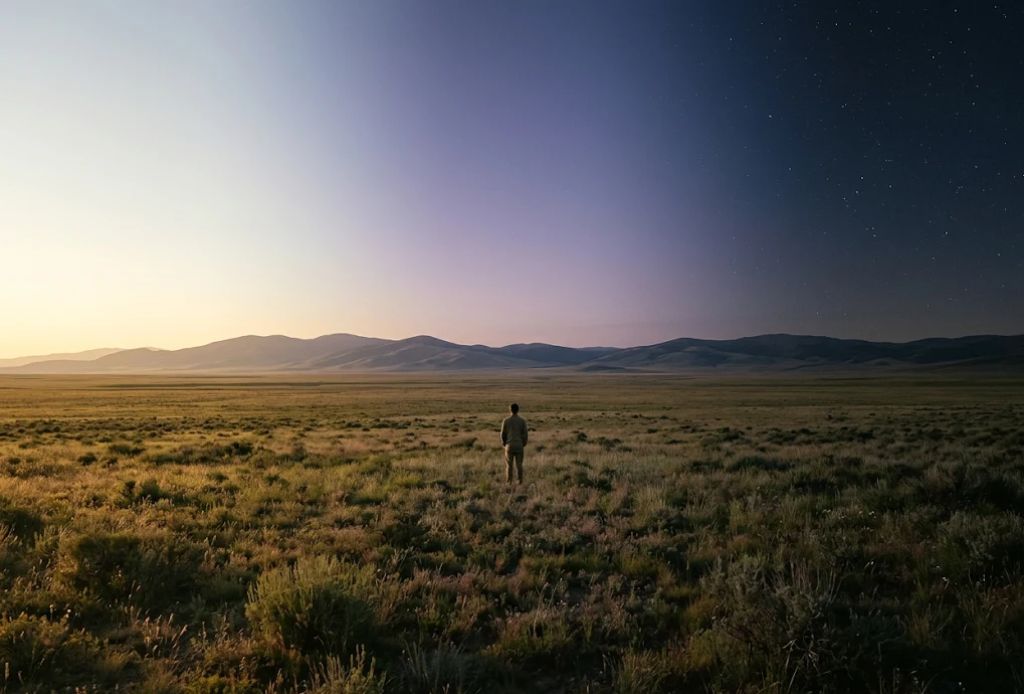
The gaze has its place in this posture. In yoga it is called Drishti, and it is nothing more than directing the eyes toward a fixed and soft point ahead. Not a hard or unfocused stare, but a conscious direction that helps stabilize the mind and maintain balance. The head aligns naturally over the spine, neither dropping forward nor tilting back. The face remains calm, without furrowing the brow or clenching the jaw.
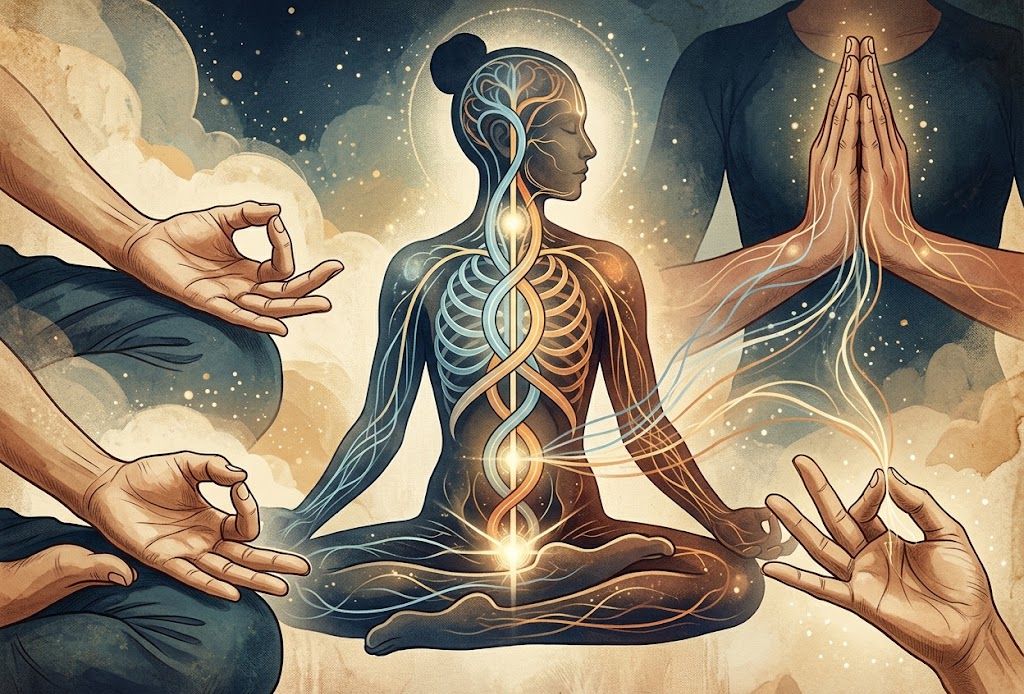
Breath is the thread that runs through the entire posture. In Samasthiti, breathing is neither forced nor artificially modified. You inhale and exhale through the nose, at a rhythm the body naturally chooses. The inhalation gently lengthens the spine from the pelvis to the crown of the head. The exhalation allows the shoulders to release and the weight to settle a bit more into the feet. Breathing in Samasthiti is simply being present in one's own body without needing to do anything special.
In yoga, you do not surpass, you deepen. Samasthiti can be practiced for years, and each time it offers something different. At first it is learning to stand without falling. Then it is noticing how the weight distributes. Later it is observing the breath. Then it is feeling the stillness. There is no more advanced level of Samasthiti; there are layers that reveal themselves when the mind stops searching for a result and stays with what is already present.
Samasthiti is not only the beginning of a practice, but a point to which one can return again and again. Between postures, before a twist, after a backbend, at the end of a sequence. Also off the mat: while waiting in line, before a difficult conversation, upon arriving at a new place. Standing firmly planted, with weight evenly distributed, breath flowing, and gaze calm, is a tool that requires no equipment or space. It is a posture that fits into any moment.