In the previous article on vinyasa krama we mentioned that each main posture is first practiced dynamically, entering and exiting it several times, before holding it. Desikachar, in The Heart of Yoga, gives that distinction an exact name, and it is worth pausing on it because it completely changes the way one reads a practice sequence.
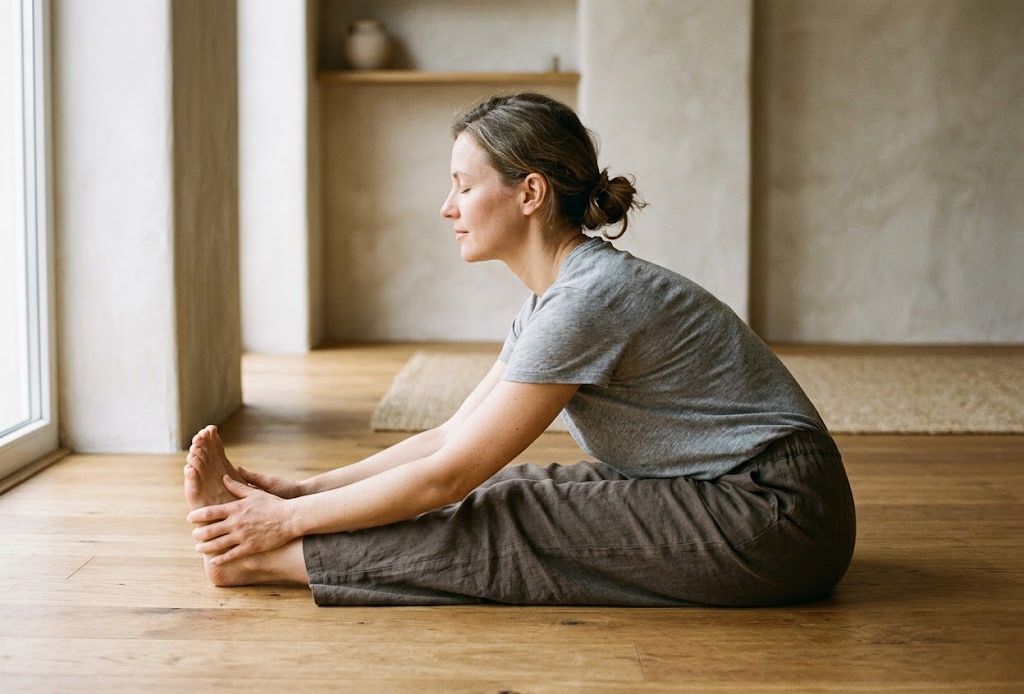
When a sequence indicates "times," it is describing movement. It is dynamic practice: one enters the posture with one phase of the breath and exits with the other, a set number of times. Eight times means, for example, eight complete cycles of entering and exiting, each guided by a specific inhalation or exhalation. The body does not stay waiting in the final form; it travels the path toward it again and again, and it is precisely that repeated journey that prepares the tissues, activates the joint, and lets the nervous system know what is coming.
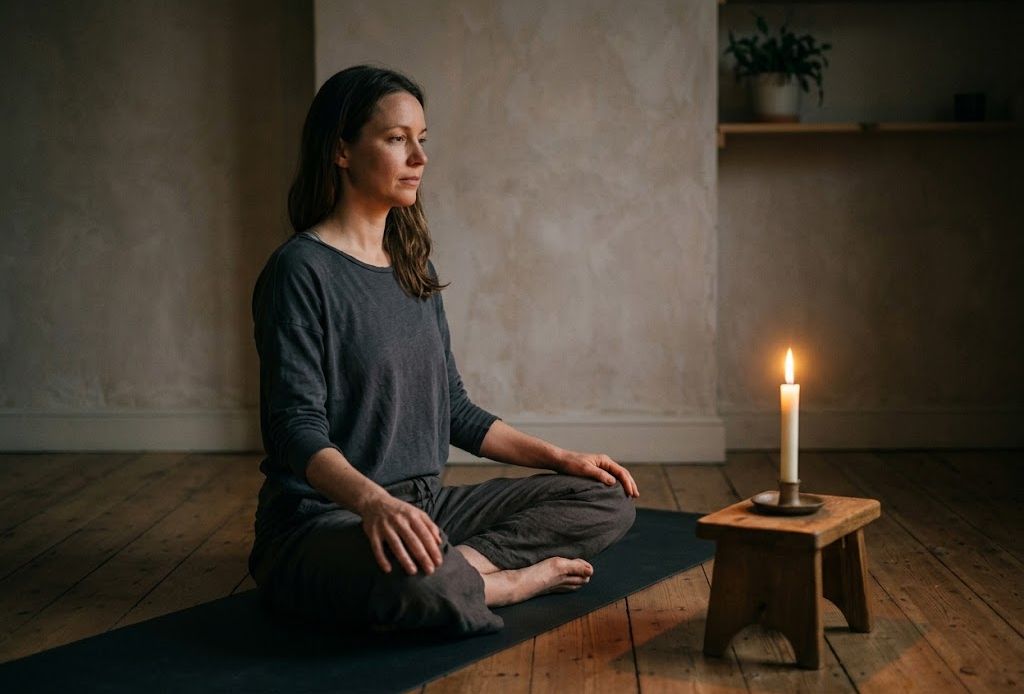
When a sequence indicates "breaths," it is describing staying. It is static practice: once the form is reached, the body stays there while the breath continues its course, several complete cycles, without leaving the posture between one and the next. Holding a posture for six breaths is not simply "enduring six times" — it is letting the breath continue at its own rhythm within a form that has already become stable, and observing what happens when the body does not have to keep moving in order to sustain itself.
The reason this distinction matters is not technical, it is one of judgment. Desikachar is explicit about something we already intuited in the Viniyoga article: the breath is the real indicator of the practice, not the clock or the number of repetitions written on a page. An "eight times" or a "six breaths" are references, not fixed rules. What effectively determines how much dynamic or static time a person needs in a posture is whether the connection between movement and breath remains intact. The moment the breath becomes agitated, shortens, or is lost, that posture — dynamic or static — has already fulfilled its function for that day.
Retentions between inhaling and exhaling are added to this same progressive logic. Desikachar clarifies that brief pauses can be introduced between the end of an inhalation and the beginning of an exhalation (or vice versa), as long as they do not compromise the natural duration of the cycle. Those retentions do not appear from the first day nor are they forced: they increase gradually as the practice develops, and in the same way they are added, they can be reduced toward the end of a pranayama session. It is the same principle of progressive adaptation that runs through this entire series, now applied to the finest detail of the breath itself.
This is also the reason why a practice sequence is not copied like a fixed recipe. Desikachar is explicit on this point: any example of a sequence that is offered serves to illustrate how the principle of vinyasa krama is applied, not as a universal routine to reproduce without further thought. And he adds something that is not a minor detail — a well-designed sequence presupposes the guidance of someone who knows how to adapt it, especially for someone who is just beginning. The progression of times and breaths that appears written presupposes a criterion behind it that decides how much of each is needed for that person, at that moment.
What this distinction teaches, then, is not postures — it is a method of reading. Any well-constructed practice alternates dynamic moments with static moments, and between both there is always explicit rest, space for the heart rate and breathing to return to their usual state before continuing. That alternation is not accidental: it is the concrete way in which the body confirms, posture by posture, whether what is being asked is what it can give today. The written sequence is only the map. The criterion of when to advance and when to hold is always given, still, by the breath.