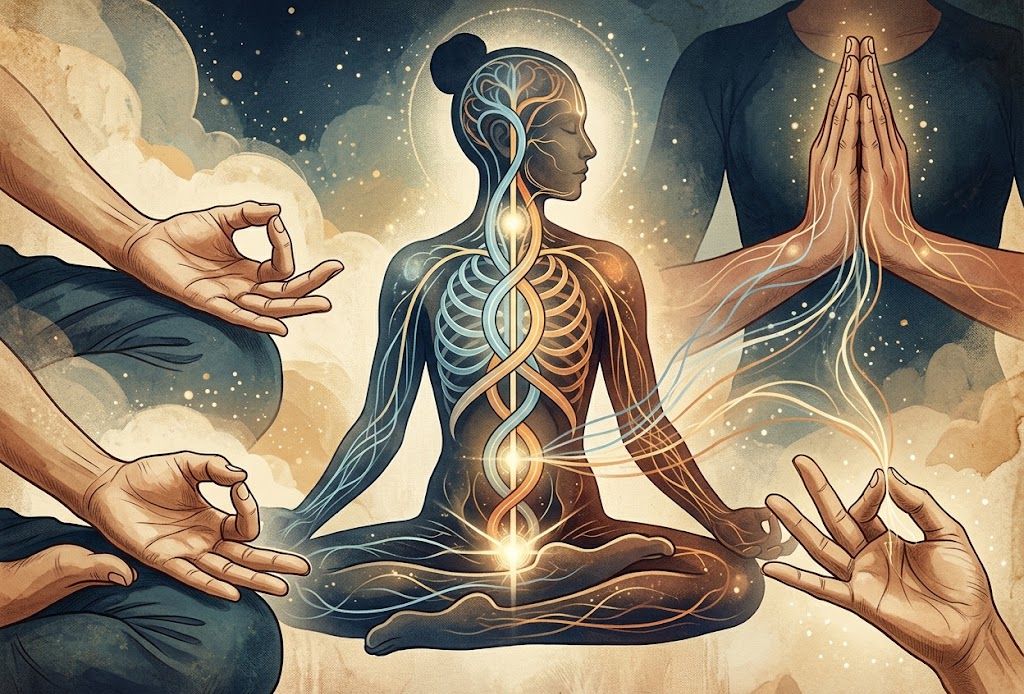
You have probably heard the term pranayama. It is one of the best-known words in yoga. But pranayama is only part of something larger. In the yoga tradition, the human being is described as five layers or sheaths that extend one within another. They are called Koshas, and the word kosha literally means "sheath," but it also carries the idea of extending, expanding. They are not cages. They are living layers.
The first layer is Annamaya Kosha, the sheath of food. Anna means food. It is the physical body, the densest and most tangible. What you touch, what you see, what weighs. This layer is nourished by what you eat, drink, and breathe. It is also nourished by movement. When you practice asanas, you are working directly on Annamaya Kosha. A tired, stiff, or painful body is sending signals from this first layer. Paying attention to it is not superficial; it is the foundation.
The second layer is Pranamaya Kosha, the sheath of vital energy. This is where pranayama comes in. Prana is not the air itself, but the energy that air carries. This layer is more subtle than the physical body, but you can clearly feel it. When after a few deep breaths your body feels lighter, you are experiencing Pranamaya Kosha. When you feel tired without any obvious physical cause, that too is this layer. Pranamaya Kosha is the bridge between body and mind. That is why regulating the breath regulates everything else.
The third layer is Manomaya Kosha, the sheath of the mind. Manas means mind, but not just thoughts. It includes emotions, memories, sensory perceptions, and desires. This is the layer that never stops talking. The one that gets bored, that gets angry, that wants or does not want. Manomaya Kosha is neither bad nor good. It is just one layer. The problem arises when you believe you are only that: your thoughts and emotions. Yoga proposes observing this layer without identifying with it.
The fourth layer is Vijnanamaya Kosha, the sheath of knowledge. Vijnana is discernment, wisdom, intuition. It is not accumulated information. It is the ability to distinguish what truly matters from what does not. This layer allows you to say "this is not good for me" and act accordingly. It also recognizes repetitive patterns and decides to step out of them. Vijnanamaya Kosha is not developed just by reading books. It is developed through silent reflection, self-study, and the constant practice of turning attention inward.
The fifth layer is Anandamaya Kosha, the sheath of bliss. Ananda means bliss, peace, fullness. It is not explosive joy nor happiness because something good happened. It is an underlying peace that does not depend on circumstances. You can be sad and still feel that background layer. Experiencing Anandamaya Kosha is not common in daily life, because the previous layers are usually too noisy. But it appears in moments of deep silence, in meditation, in very calm breathing, or simply when the mind stops demanding that everything be different.
These five layers are not separate like drawers. They interpenetrate. What happens in Annamaya (physical pain) affects Pranamaya (breath becomes shallow), which affects Manomaya (the mind becomes irritated), which affects Vijnanamaya (clarity is lost). And vice versa. It is not about escaping the denser layers to live only in the subtle ones. It is about recognizing that you are in all of them at the same time. Yoga practice works with all five without saying so explicitly. Asanas work with Annamaya. Pranayama works with Pranamaya. Observing thoughts works with Manomaya. Study and self-reflection work with Vijnanamaya. Meditation and silence work with Anandamaya.
The word kosha implies extension, not enclosure. A common mistake is to think that the layers trap the being, like Russian nesting dolls. That is not the case. Kosha means sheath, but also to expand. Each layer extends beyond the previous one, like layers of an energy field. Annamaya is the densest and the smallest in subtle terms. Anandamaya is the most extensive, the one that contains everything. That is why you do not need to break the layers. You need to inhabit them with awareness and allow them to expand.
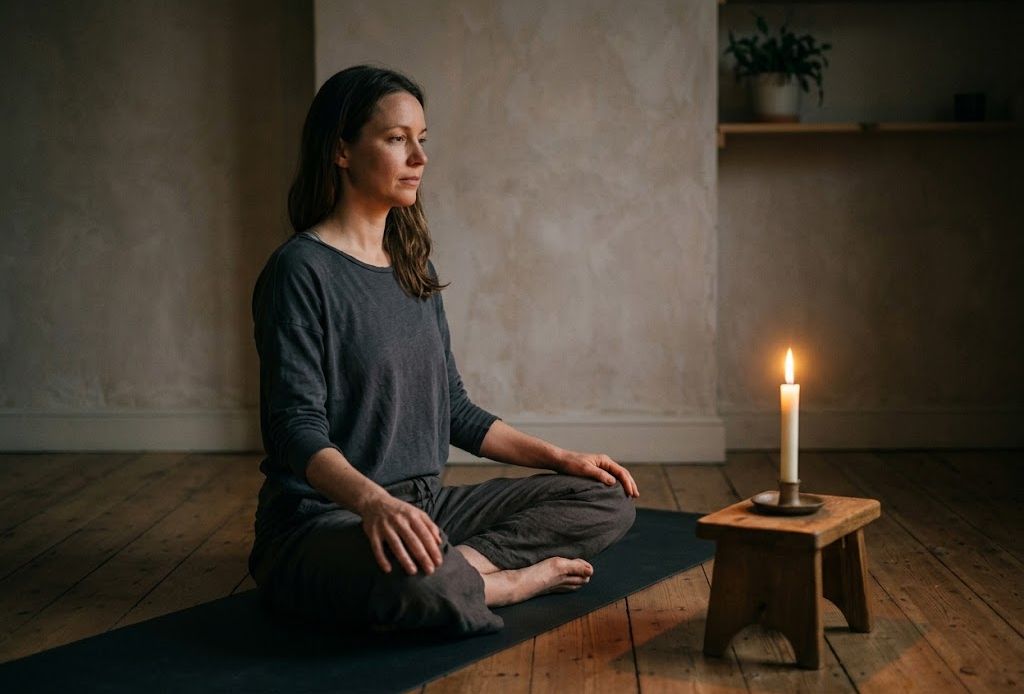
Understanding the Koshas changes the way you practice. When you are in a posture, you are not just moving a body. You are also moving energy, observing the mind, activating discernment, and brushing against bliss. You do not need to remember all five names all the time. It is enough to know that the practice is deeper than it seems. That a simple stretch or a conscious breath is already touching layers that are not visible. The Koshas are not theory for intellectuals. They are a simple map to remember that yoga does not work only on muscle or mental calm. It works on the totality of the being.