The Heart Sutra is one of the best-known texts of Mahayana Buddhism. It is short. Very short. But its brevity is not simplicity. It speaks of emptiness, of the skandhas, of liberation from suffering. And although it uses words like "emptiness" or "non-being," it is not a nihilistic text. It does not say that nothing exists. It says that nothing exists by itself. That is the key.
Thich Nhat Hanh, a Vietnamese Buddhist monk, dedicated much of his teaching to explaining this sutra. He did not treat it as a sacred text to be repeated. He treated it as an invitation to look differently. He said that the word "emptiness" (sunyata) is easily misunderstood. People hear "emptiness" and think of absence, of nothing, of an abyss. But in Buddhism, emptiness means empty of a separate existence.
A very clear example of his: a sheet of paper. The sheet of paper does not have an independent existence. It depends on the tree, the sun, the earth, the water, the logger, the mill, the clouds that brought the rain. If you remove the sun, there is no sheet. If you remove the earth, there is no sheet. If you remove the cloud, there is no sheet. The sheet is empty of a separate self. But it is not empty of everything. It is full of sun, of earth, of clouds, of everything that made it possible.
The same applies to human beings. We do not exist by ourselves. We depend on our parents, the air we breathe, food, water, education, the language we speak, others. If you remove all that, no independent "I" remains. That does not mean we do not exist. It means we exist in relation to everything else. Buddhism calls this "Buddha nature" or "interbeing." There is no isolated self. There is a network of connections.
The Heart Sutra says: "Form is emptiness, emptiness is form." Thich Nhat Hanh translated it as: "Form is the emptiness, emptiness is the form." They are not two different things. What we see (form, the body, sensations, thoughts) does not exist apart from its context. And the context does not exist apart from what we see. It is a dance. Not a duality. That is why the sutra says that suffering dissolves not when you escape the world, but when you see clearly how the world is made.
The practice is not about thinking this idea. It is about truly looking. Looking at a leaf, a sensation, a thought, and asking: what is this made of? What conditions made it possible? When you look like that, you begin to see interconnection. And when you see interconnection, you let go of the idea of a separate self that suffers because things do not go its way. It is not that there is no pain. It is that pain is no longer lived as a personal sentence.
Thich Nhat Hanh taught that the Heart Sutra is for practicing, not for believing. It is not a dogma. It is a magnifying glass to look at reality. Whenever you feel that something is "too heavy" or "impossible to change," you can apply the question: what is this made of? And almost always you discover that this weight is made of many things that are not a separate self. There is history, there is context, there is fear, there are expectations. By seeing it, the weight does not magically disappear, but it becomes more manageable. Nothing special needs to be done. Just look.
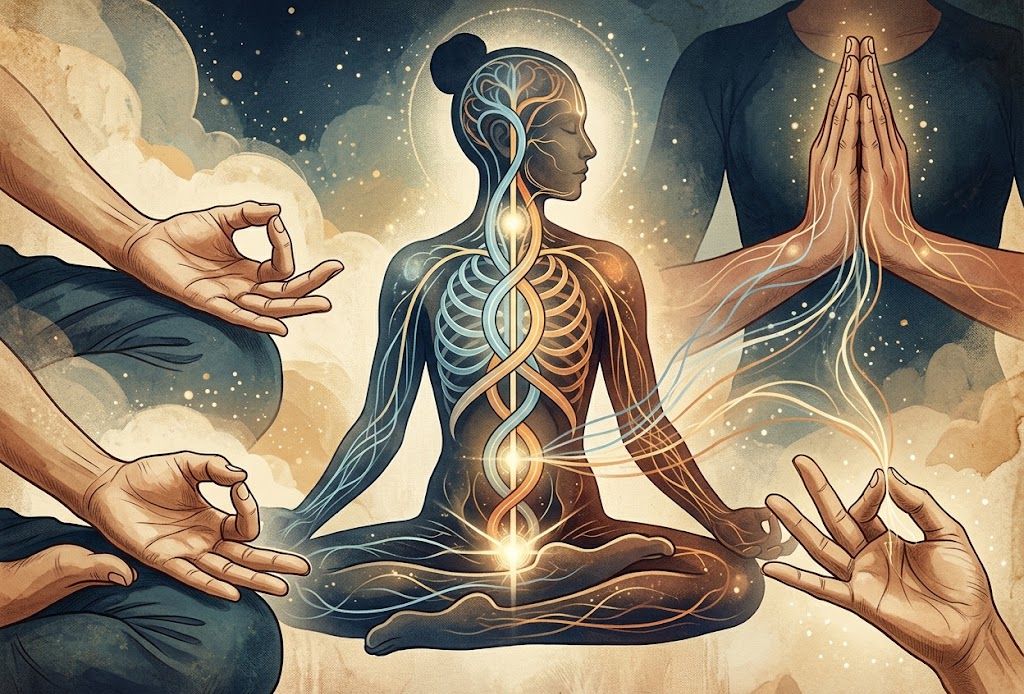
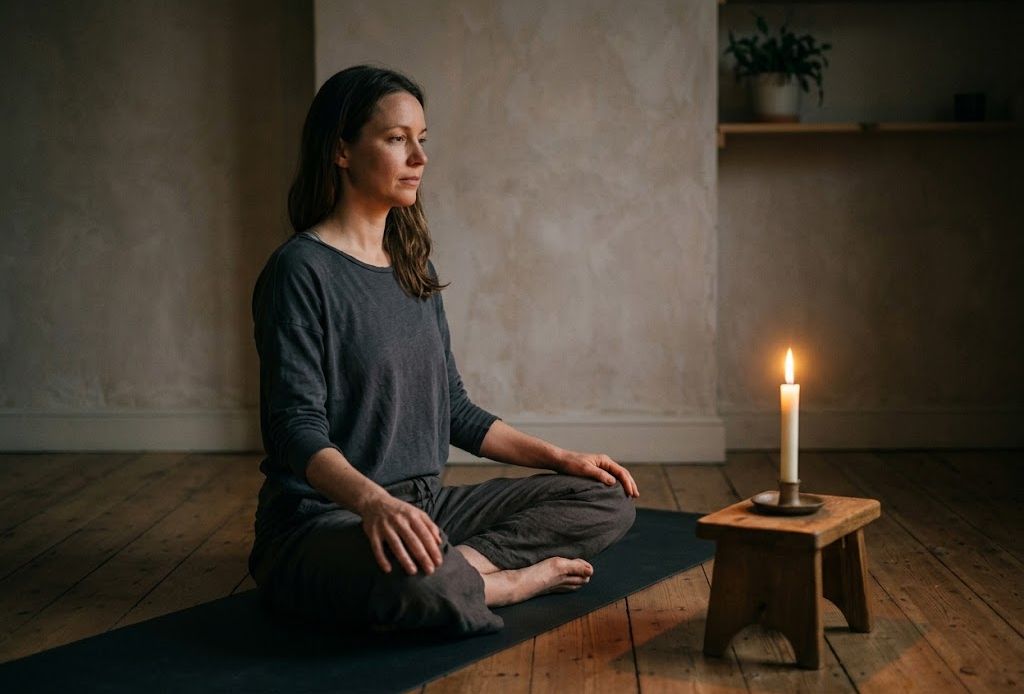
Yoga practice can connect with this without needing to convert to Buddhism. In yoga, you train attention. You observe the breath, the body, the thoughts. The Heart Sutra adds a direction to that observation: looking to see how things are connected. You do not have to believe in reincarnation or karma. It is enough to look at a sheet of paper and notice the cloud that is still there. Or to look at your own irritation and notice the fatigue, the fear, the story that feeds it. That is practice. That is enough.