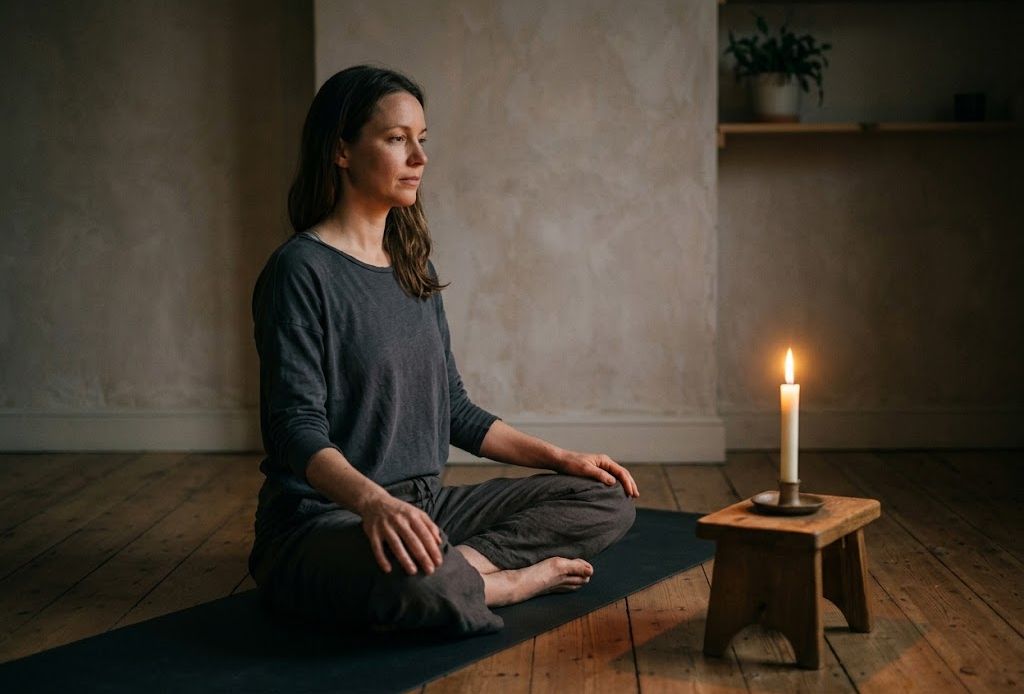
The process of meditation is neither a mystery nor a gift. It is a training. And like any training, it has steps. In the yoga tradition, eight steps are described. The first five prepare the body and mind for something more subtle. The last three are meditation itself: Dharana, Dhyana, Samadhi. They are not magical states. They are phases of a process that anyone can follow if they understand the order.
The mind is not calmed by magic. It is trained. Just as you do not learn to play an instrument in one day, you do not learn to meditate without practice. The mind has a deep habit: wandering. That habit does not disappear on its own. It is transformed through sustained effort and clear direction. That is why yoga does not propose sitting down and "not thinking." It proposes starting with something simpler: sustaining attention.
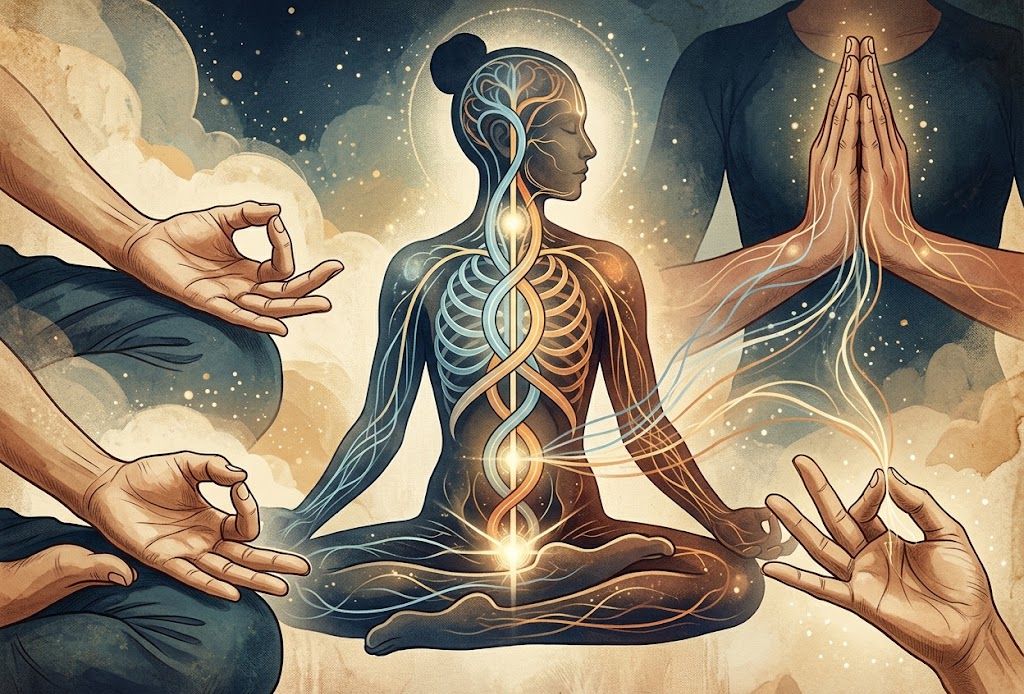
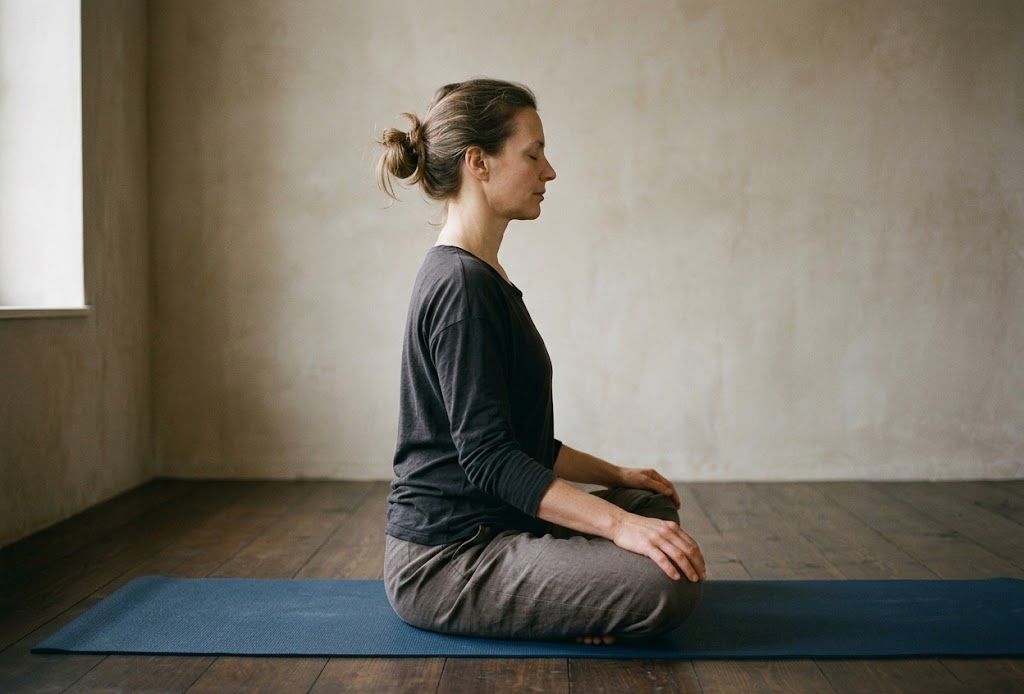
The eight limbs of yoga begin long before meditation. Yama and Niyama are principles of conduct and self-care. Asana is posture, and not just the pretty posture, but the ability to be still without discomfort. Pranayama is breath regulation. Pratyahara is the withdrawal of the senses, learning not to chase every external stimulus. Without these five previous steps, meditation becomes frustrating. With them, it becomes possible.
Dharana is learning to sustain attention on a single point. The word means concentration, but not forced concentration. It is the decision to choose something (the breath, a sensation, an internal image) and return to it again and again. A clear example: sustaining attention on the breath for three full breaths without getting lost in a thought. It sounds simple. It is not. But that is the first step. Dharana is trained. It is not achieved right away.
Dhyana appears when attention no longer needs to try so hard. It is not that there are no distractions, but the mind no longer hooks onto every thought. There is continuity. Something sustains itself. An example: you notice that you no longer get distracted as much as at the beginning. The breath is still there, and you are too, without fighting. That is Dhyana. It is not an extraordinary state. It is a flow. The word is sometimes translated as meditation, but technically it is the second internal step: continuous attention without friction.
Samadhi is not a trance or a divine possession. It is the moment when the mind stops interfering. There is no separation between the observer, the observed, and the act of observing. A very simple example: at some point in practice, the breath seems to breathe itself. You are not controlling it. You are not following it. It is just happening, and you are there. That is a glimpse of Samadhi. It does not last hours. Sometimes it lasts a second. But that second transforms the understanding of what is possible.
Meditation is not a quick technique. It is the result of a process. Hence the modern frustration: someone sits for the first time, tries to "meditate," their mind does not stop, and they conclude it does not work. It is not that it does not work. It is that they skipped the steps. Dharana takes weeks or months. Dhyana arrives only when Dharana is stable. Samadhi is not sought; it appears. Depth is not improvised. It is built layer by layer, breath by breath.
Yoga begins long before meditation. It begins in how you breathe when everything goes wrong. In how you hold a posture even if you tremble. In how you come home after a difficult day and still practice. Perfect attention does not exist. What exists is attention that returns again and again. That is the true discipline. Not absolute stillness, but the decision not to give up when the mind wanders for the hundredth time.
Just as the spine has four physical movements, the mind has three internal movements. Dharana is the movement of focusing. Dhyana is the movement of flowing. Samadhi is the movement of merging. And just as you do not start a practice with the deepest twist, you do not start mental training with Samadhi. You start with Dharana: one point, one breath, one moment. The same as in Samasthiti: standing firmly planted first requires noticing the feet, then the weight, then the breath. The mind also needs its Samasthiti: holding a simple object, without demanding results.
There is no summit to reach and stay on. You enter Dharana, you lose it, you enter again. You hold Dhyana for a while, then the mind scatters. Samadhi may appear for a second and disappear. That is not failure. It is the rhythm. The path is not an arrow pointing upward; it is a coming and going. The bar is not about not falling. The bar is about getting back up, again and again, without drama. As Facundo Cabral says: if that is how life is, why worry?
Depth is not improvised. It is built. Day after day. Sometimes advancing, sometimes stepping back. It does not matter. What matters is understanding that meditation is not a place you arrive at quickly. It is a path traveled with patience. Dharana, Dhyana, Samadhi. They are not goals. They are stages. And the first stage is always learning to return. Once. And again. And again.