Everyone knows the sun salutation. But there is no need to memorize a classic sequence to start moving with this criterion — a simple series is enough, guided by the breath, one that anyone can go through without pressure or performance goals. This is one possibility.
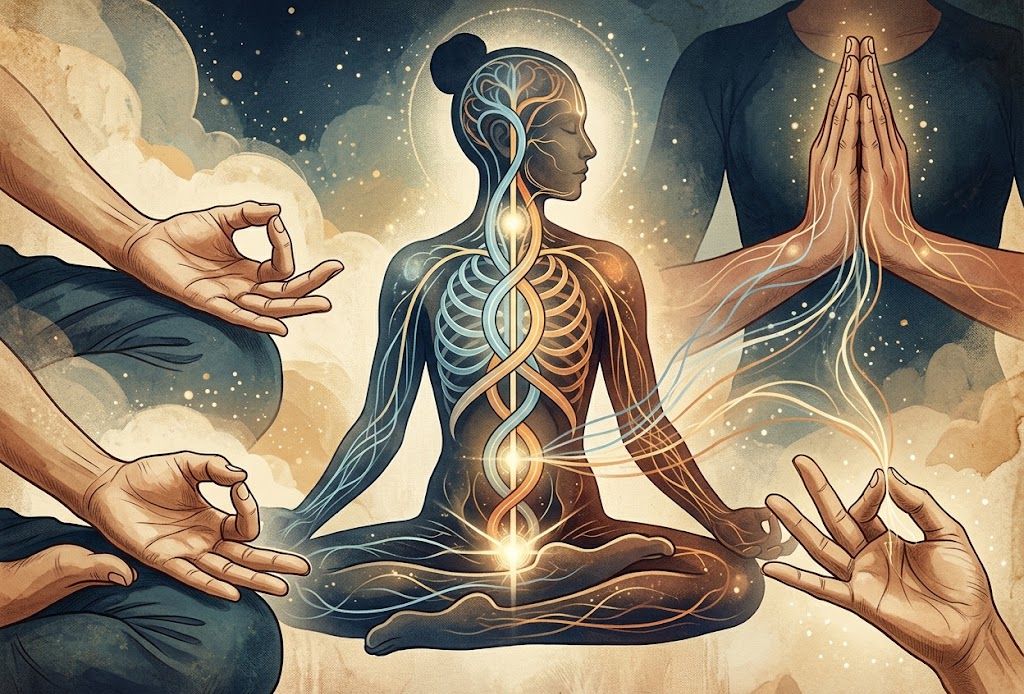
You start standing, still, feeling the support of the feet on the floor. On the inhalation, the arms rise from the sides until they meet above the head, the body stretches from the heels to the tips of the fingers. On the exhalation, the arms come back down to the sides. This first movement seeks nothing more than to reconnect with one's own respiratory rhythm before beginning — it is the prana vayu we described in a previous article, the initial reception, opening its way.
From there, the body leans forward and the hands and knees come to the floor. On all fours, with the exhalation the back rounds gently upward like a cat, and with the inhalation it sinks toward the floor, the chest and the gaze opening forward. Repeating this movement a few times, following the breath and not the other way around, is what gives the spine the warning of what is coming.
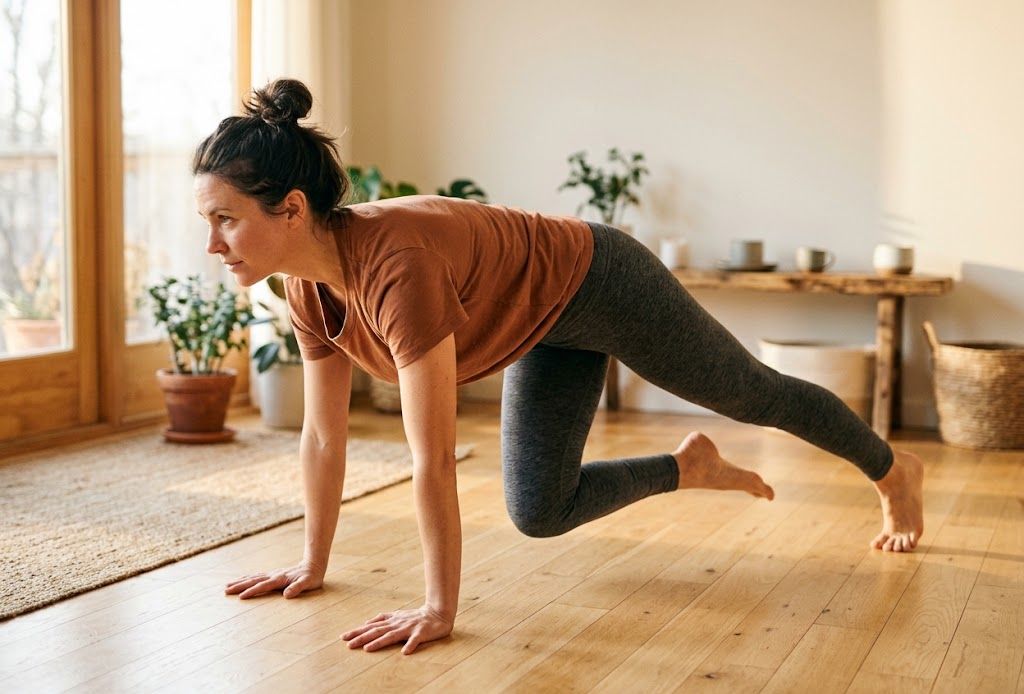
From all fours, on the exhalation, the legs stretch back until they form a plank. The body holds for an instant in that straight line, firm, without letting the hips drop. Then, with the next exhalation, the body lowers toward the floor — resting first on the knees if support is needed, or bending the arms in a controlled way until the whole body reaches the ground. There is no single correct way to come down; there is the way that body, that day, can sustain without losing the breath.
From the floor, on the inhalation, the chest lifts. Those who feel no lumbar discomfort can take this toward a gentle cobra, pressing the palms against the floor and opening the chest forward without forcing the lower back. Those who feel or want to prevent that discomfort can rest on the forearms instead of the hands, lifting the chest with much less demand on the spine. Neither of the two versions is a reduction of the other — each one is the correct posture for that body at that moment, which is exactly the principle we have been repeating throughout this series.
On the exhalation, the body moves back into child's pose. The hips rest toward the heels, the arms stretch forward or rest beside the body, the forehead seeks the floor. Here there are no times to count — it is a pause, the explicit rest between one stretch of the sequence and the next, the same kind of pause that Desikachar points out as necessary before continuing.
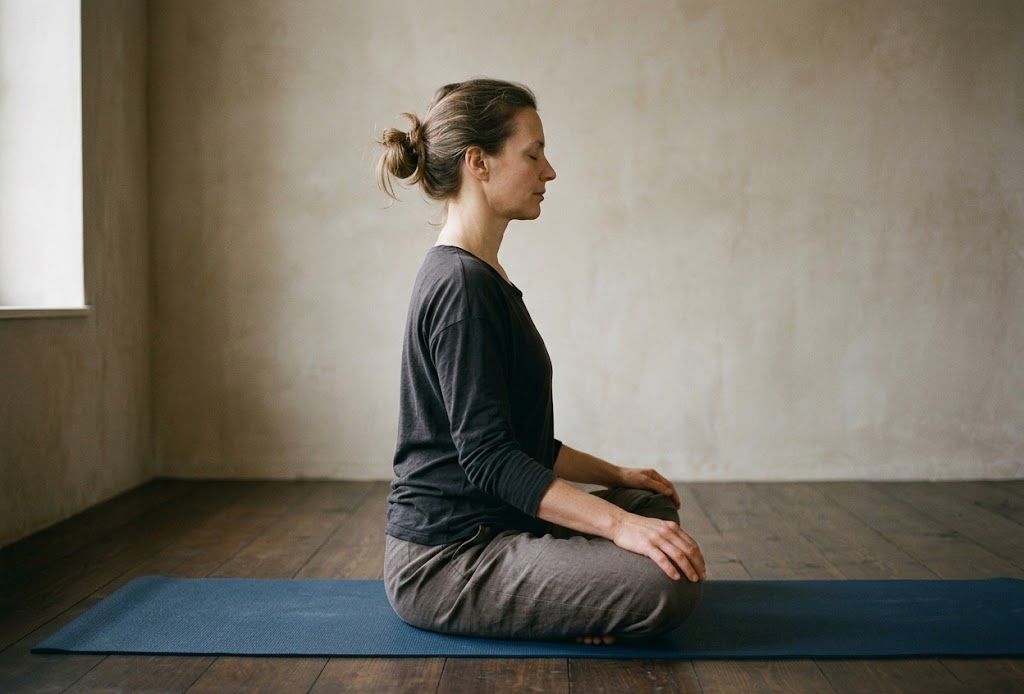
From there, the body comes to sit with the legs stretched forward. On the exhalation, the torso lets itself fall gently toward the legs, without trying to touch anything in particular — only allowing the weight of the body to rest forward while the breath continues its course. It is a closing inward, the opposite of the opening with which the sequence began.
The body lies down on its back and brings the knees toward the chest. There, a gentle rocking from side to side, following the breath's own impulse, massages the lower back and finishes loosening what remained tense along the way. Then the legs let go, extend, and the whole body surrenders to the floor in savasana.
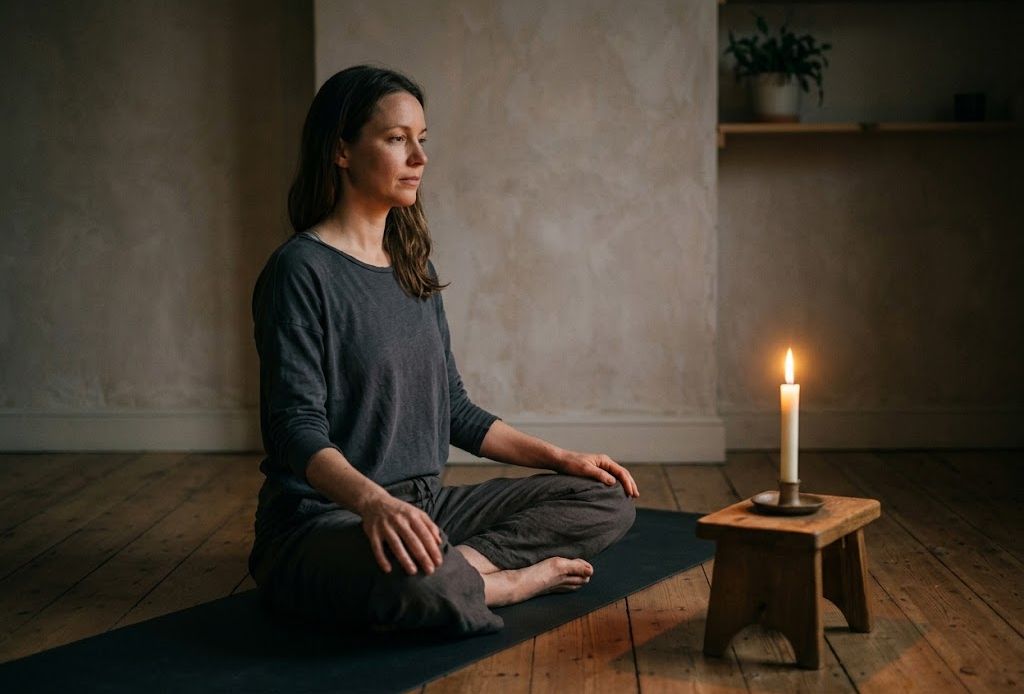
Savasana is not the end of the sequence — it is the part where all of the above is effectively integrated. The body remains still, with no effort to hold a form, while the breath returns on its own to its usual rhythm. There is no need to count times or breaths here. Only to remain, for as long as needed, and let the body confirm what it already knows.